Trusted company that deals in Quality-made products


 Send Inquiry
Sodium acetate trihydrate
Price 305 INR/ Kilograms
MOQ : 1 Kilograms
Sodium acetate trihydrate Specification
- Molecular Formula
- C2H3NaO23H2O
- CAS No
- 6131-90-4
- Packaging Type
- Bag / Drum / Custom Packaging
- Ph Level
- 7.5-9.0 (5% solution)
- Storage Instructions
- Store in a cool, dry, well-ventilated area, away from incompatible substances.
- Purity
- 98-99%
- Physical State
- Solid
- Melting Point
- 58C
- Shelf Life
- 2 years
- Usage
- Laboratory, Textile processing, Concrete sealant, Food preservative, Acid-base buffer
- Density
- 1.45 Gram per cubic centimeter(g/cm3)
- Size
- Custom / According to requirement
- Molecular Weight
- 136.08 g/mol
- Boiling point
- Decomposes
- Grade
- Chemicals
- Type
- Industrial Lab Chemicals
- Application
- Textile industry, Tanning, Printing, Laboratory reagent, Buffer solutions, Food additive
- Appearance
- White powder
- Purity(%)
- 99%
- Free Alkalinity
- Max 0.03% as NaOH
- Stability
- Stable under recommended storage conditions
- Solubility in Water
- Very soluble
- Odor
- Slight acetic acid odor
- Iron Content
- Max 10 ppm
- HS Code
- 29152990
- pH (1% Solution)
- ~8.9
- Lead Content
- Max 2 ppm
- EC Number
- 204-823-8
- Refractive Index
- n20/D 1.439
Sodium acetate trihydrate Trade Information
- Minimum Order Quantity
- 1 Kilograms
- Payment Terms
- Cash Advance (CA), Cash in Advance (CID)
- Supply Ability
- 1 Kilograms Per Week
- Delivery Time
- 1 Week
- Main Domestic Market
- All India
Sodium acetate trihydrate About
HPLC Buffers and Reagents
Sodium acetate trihydrate for HPLC LiChropur
packaging | 100 g in Plastic bottle (5438330100) |
solubility | 613 g/l |
density | 1.42 g/cm3 (20 C) |
flash point | >250 C |
autoignition temp. | 607 C |
mp | 58 C |
pH | 7.5 - 9.2 (50 g/l, HO, 20 C) |
Versatile Industrial Applications
Sodium acetate trihydrate is widely valued for its role in the textile industry, leather tanning, printing, and laboratory use. Its buffering and neutralizing properties make it crucial in these processes, also proving effective as a concrete sealant and food preservative. The substance's high purity and stability ensure reliable outcomes across all applications.
Safe Handling and Storage
To maintain its quality and effectiveness, sodium acetate trihydrate should be stored in a cool, dry, and well-ventilated area, away from incompatible materials. With a shelf life of two years, it is securely packaged in bags or drums per customer requirements, supporting safe transportation and storage in industrial or laboratory environments.
FAQ's of Sodium acetate trihydrate:
Q: How is sodium acetate trihydrate commonly used in industry?
A: It is extensively utilized in the textile industry for dye processes, in leather tanning, as a buffer in laboratory work, for printing, and as a food additive. It is also applied in concrete sealants and acid-base buffer solutions due to its reliable stability and buffering capacity.Q: What benefits does sodium acetate trihydrate offer as a buffer solution?
A: Sodium acetate trihydrate maintains stable pH levels-especially between 7.5 and 9.0-making it ideal for applications requiring precise pH control, such as chemical syntheses, laboratory reagents, and food processing.Q: When should sodium acetate trihydrate be stored to preserve its stability?
A: For optimal stability and shelf life, sodium acetate trihydrate should be stored in a cool, dry, and well-ventilated area, away from moisture and incompatible substances. Following these guidelines helps retain product quality for up to two years.Q: Where is sodium acetate trihydrate applied in the textile industry?
A: It is used as a mordant and pH regulator during textile dyeing processes, helping to enhance color stability and ensure uniform dye uptake on fabrics.Q: What is the recommended process for dissolving sodium acetate trihydrate in water?
A: Since the compound is very soluble in water, simply add the desired amount to water at room temperature, stirring until completely dissolved. The process is straightforward due to its high solubility.Q: Can sodium acetate trihydrate be used in food processing, and if so, how?
A: Yes, it acts as a preservative and flavoring agent in foods, helping to control acidity and extend shelf life. Its high purity ensures it is suitable for regulated food industry applications.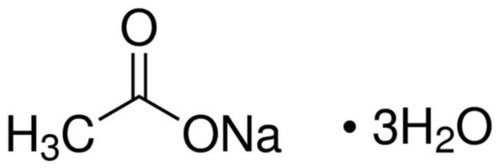
Tell us about your requirement

Price:
Quantity
Select Unit
- 50
- 100
- 200
- 250
- 500
- 1000+
Additional detail
Mobile number
Email

More Products in Chromatography Reagents & Solvents Category
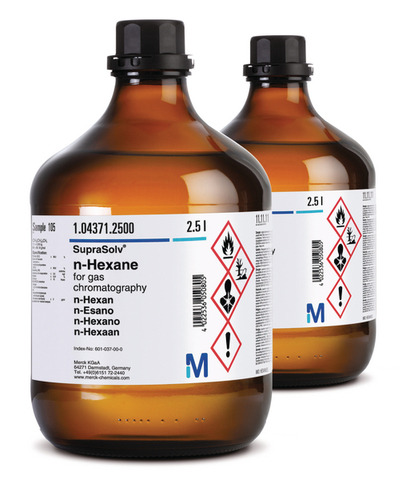
2-Propanol
Price 305 INR / Kilograms
Minimum Order Quantity : 1 Kilograms
Storage Instructions : Store in tightly closed containers in a cool, dry, wellventilated place away from heat and ignition sources.
Purity : 99.9%
Molecular Formula : C3H8O
Packaging Type : Drums, bottles, canisters
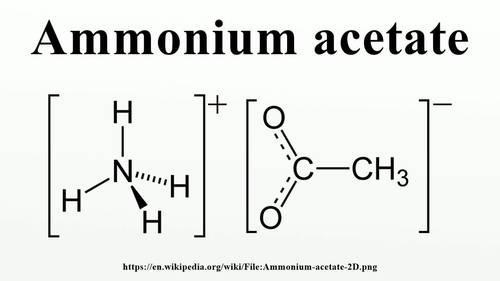
Ammonium acetate
Price 305 INR / Kilograms
Minimum Order Quantity : 1 Kilograms
Storage Instructions : Store in a cool, dry place, tightly closed
Purity : 99% min
Molecular Formula : C2H7NO2
Packaging Type : HDPE bags, sealed containers
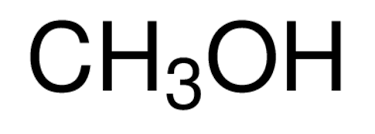
Methanol
Price 305 INR / Kilograms
Minimum Order Quantity : 1 Kilograms
Storage Instructions : Store in a cool, dry place, away from heat and ignition sources.
Purity : >99.9%
Molecular Formula : CH3OH
Packaging Type : Drum
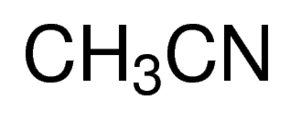
Acetonitrile
Price 305 INR / Liter
Minimum Order Quantity : 1 Liter
Storage Instructions : Store in a cool, dry, wellventilated area away from heat and incompatible substances
Purity : 99.9%
Molecular Formula : C2H3N
Packaging Type : Glass Bottles / HDPE Carboys / Drums

Contact Details

- 104 / 14 B, Muljinagar society, Nizampura,Vadodara - 390002, Gujarat, India
- Phone :07971670415

- Mr Mr Chintak (Partner)
- Mobile :07971670415
- Send Inquiry
 Send Inquiry

 Send Inquiry
 Send SMS
CHINTAN ENTERPRISE
All Rights Reserved.(Terms of Use)
Developed and Managed by Infocom Network Private Limited.
Developed and Managed by Infocom Network Private Limited.
