Trusted company that deals in Quality-made products


 Send Inquiry
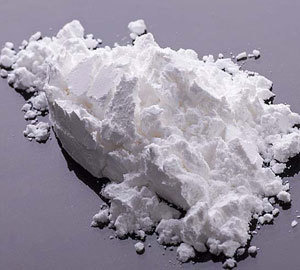
Potassium Bromide IR
Price 305 INR/ Milliliter
MOQ : 1 Ton
Potassium Bromide IR Specification
- Grade
- Chemical Grade
- Type
- School Lab Chemicals
- Purity(%)
- 97%
Potassium Bromide IR Trade Information
- Minimum Order Quantity
- 1 Ton
- Payment Terms
- Cash in Advance (CID), Cash Advance (CA)
- Supply Ability
- 1 Ton Per Week
- Delivery Time
- 1 Week
- Main Domestic Market
- All India
About Potassium Bromide IR
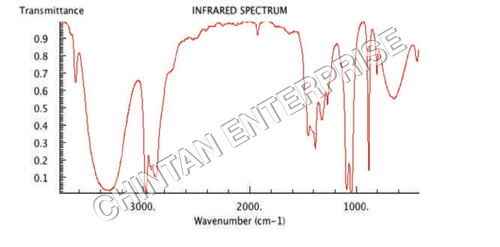
Potassium Bromide IR, frequently alluded to as KBr IR, is a synthetic compound known as potassium bromide (KBr). It is utilized in infrared spectroscopy (IR) as an example readiness method to make straightforward pellets or circles for dissecting the sub-atomic creation of a great many materials. Potassium bromide is for the most part protected to deal with, however similarly as with any synthetics, keeping security guidelines is fundamental. Abstain from breathing in the residue while crushing KBr, wear suitable individual defensive hardware, and work in a very much ventilated region.
Features of Potassium Bromide IR:
- Material is packed in airtight glass bottle to ensure long product life and minimise interferences from moisture and environment condition.
- Optimum size crystals to control moisture absorbance while handling and easy to grind.
- Pellet with sample transparent in IR region. Suitable for IR optical Windows and component for general spectroscopy because of its wide spectral range.
- No Significant Optical absorption in high transmission range.
FAQs of Potassium Bromide IR:
Q: How is Potassium Bromide IR utilized in infrared spectroscopy?
A: In IR spectroscopy, a limited quantity of an example is blended in with potassium bromide powder and compacted into a straightforward pellet or plate utilizing a water driven press. This KBr pellet permits the example to be examined by going infrared light through it, and the subsequent range gives data about the substance bonds and sub-atomic construction of the example.
Q: For what reason is Potassium Bromide utilized for IR spectroscopy?
A: Potassium bromide is liked for IR spectroscopy test readiness since it is straightforward in the infrared district of the electromagnetic range and doesn't essentially impede the example's range. It is likewise somewhat simple to work with, as it very well may be ground into a fine powder and packed into pellets.
Q: Might Potassium Bromide IR pellets at any point be reused?
A: No, Potassium Bromide IR pellets are commonly utilized just a single time. After examination, the pellet is disposed of on the grounds that it might contain buildups from the example, which could influence ensuing estimations.
Q: Are there any limits to involving Potassium Bromide IR for test readiness in IR spectroscopy?
A: Potassium Bromide IR isn't reasonable for tests that are delicate to dampness or tend to respond with KBr. Furthermore, tests that are profoundly retaining in the infrared locale may not yield great spectra with this procedure.
Q: Could Potassium Bromide IR at any point influence the range of the example being dissected?
A: As a rule, Potassium Bromide IR negligibly affects the range of the example, particularly in the event that the example is very much blended in with the KBr and appropriately ready. In any case, it's fundamental to consider possible collaborations and obstructions while choosing this example arrangement strategy.
Tell us about your requirement

Price:
Quantity
Select Unit
- 50
- 100
- 200
- 250
- 500
- 1000+
Additional detail
Mobile number
Email

More Products in Laboratory Chemicals Category
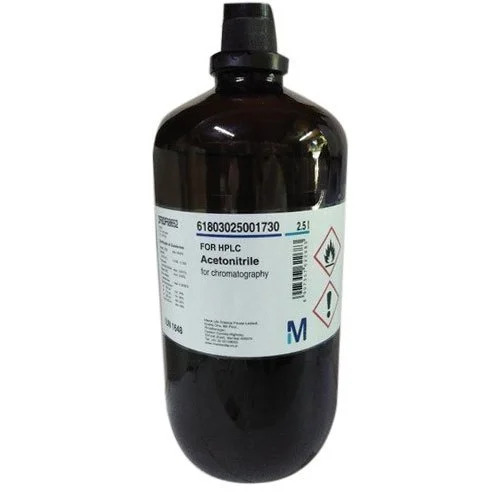
Acetonitrile for chromatography, 2.5 Ltr
Price 280 INR / Liter
Minimum Order Quantity : 1 Liter
Grade : HPLC Grade
Shelf Life : 24 months
Storage Instructions : Store in a cool, dry place
Purity(%) : >99.9 %
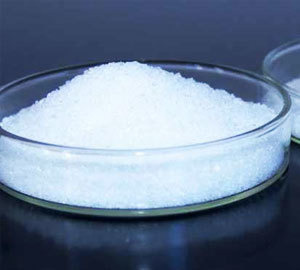
Sodium Citrate Dihydrate
Price 305 INR / Kilograms
Minimum Order Quantity : 1 Kilograms
Grade : Chemical Grade
Shelf Life : 2 years
Storage Instructions : Store in cool, dry, wellventilated area. Keep container tightly closed.
Purity(%) : 100%
GC-HS Solvents
Price 305 INR / Liter
Minimum Order Quantity : 1 Liter
Grade : Chemical Grade
Shelf Life : 36 months under recommended storage conditions
Storage Instructions : Store in cool, wellventilated area away from ignition sources
Purity(%) : 99%
Sodium Iodide
Price 305 INR / Kilograms
Minimum Order Quantity : 1 Kilograms
Grade : Chemical Grade
Shelf Life : 5 years (under proper storage)
Storage Instructions : Store in tightly sealed container, away from light and moisture
Purity(%) : 99%

Contact Details

- 104 / 14 B, Muljinagar society, Nizampura,Vadodara - 390002, Gujarat, India
- Phone :07971670415

- Mr Mr Chintak (Partner)
- Mobile :07971670415
- Send Inquiry
 Send Inquiry

 Send Inquiry
 Send SMS
CHINTAN ENTERPRISE
All Rights Reserved.(Terms of Use)
Developed and Managed by Infocom Network Private Limited.
Developed and Managed by Infocom Network Private Limited.
