Trusted company that deals in Quality-made products


 Send Inquiry
Laboratory Filters
Price 1000 INR/ Unit
MOQ : 1 Unit
Laboratory Filters Specification
- Control Type
- Manual
- Temperature Resistance
- Up to 200C
- Shape
- Cylindrical or funnel-shaped
- Accuracy
- High retention efficiency
- Features
- Reusable, autoclavable, chemical resistant, easy assembly
- Glass Type
- Borosilicate
- Speed Range
- Manual/Gravity driven
- Type
- Laboratory Filters
- Dimension (L*W*H)
- Varied (Standard sizes available)
- Product Type
- Laboratory Filters
- Weight
- 1.5 Kilograms (kg)
- Equipment Type
- Filter Apparatus
- Color
- White and Sky Blue
- Equipment Materials
- Borosilicate glass, Polypropylene, PES membrane
- Width
- 300-2000 Millimeter (mm)
- Material
- Paper
- Application
- Filtration in laboratory processes
- Capacity (Ltr)
- Varies depending on type (commonly 250 ml - 1000 ml)
- Pack Size
- Single unit or sets
- Membrane Material
- PES, Nylon, or Cellulose Nitrate
- Compliance Standards
- ISO 9001 certified manufacturing
- Pore Size Range
- 0.22 m to 0.45 m standard
- Connection Type
- Vacuum or pressure filtrable
- Filter Diameter
- 47 mm and 90 mm options
- Autoclavable Parts
- All glass and polypropylene components
- Maximum Pressure
- 0.5 bar (varies by model)
- Sterility
- Available in sterile or non-sterile form
Laboratory Filters Trade Information
- Minimum Order Quantity
- 1 Unit
- Supply Ability
- 1 Unit Per Week
- Delivery Time
- 1 Week
- Main Domestic Market
- All India
About Laboratory Filters
Our firm is a renowned entity, engaged in offering a high quality Laboratory Filters which is widely used in various laboratories for different filtration works. Offered filters are manufactured by using ultra-modern technologies under the guidance of our expert professionals. These filters are highly acknowledged in the market for their excellent filtration, fine finish and easy to use. As per the requirement of our clients, we provide these filters in various packaging options. In order to ensure its flawlessness, these Laboratory Filters are tested against various quality parameters by our quality controllers.
Versatile Application Across Laboratory Filtration Needs
Suitable for both routine and specialized laboratory processes, these filters handle a wide capacity range (250 ml to 1000 ml) and operate efficiently up to 200C. Their compatibility with both vacuum and pressure-driven filtration provides flexibility for multiple methodologies, enhancing laboratory productivity and result consistency.
Superior Material Construction and Chemical Resistance
Constructed from high-grade borosilicate glass, polypropylene, and premium membrane materials (PES, Nylon, Cellulose Nitrate), our laboratory filters offer robust chemical resistance and mechanical stability. All filter components are autoclavable, making them ideal for sterile filtration workflows and repeated usage.
User-Friendly Design for Reliable Results
The filters are available in varied standard sizes and feature easy assembly, manual control, and high retention efficiency. Their cylindrical or funnel-shaped form ensures smooth handling and adaptability to different filtration setups, supporting both manual and gravity-driven operations.
FAQ's of Laboratory Filters:
Q: How are these laboratory filters typically used in a lab environment?
A: These filters are primarily used for sterilizing and clarifying liquids, removing particulates with high retention efficiency. The system accommodates vacuum or pressure-driven filtration in microbiology, analytical testing, and sample preparation.Q: What advantages do PES, Nylon, and Cellulose Nitrate membranes provide?
A: PES membranes deliver low protein binding and fast flow rates, Nylon offers broad chemical compatibility, and Cellulose Nitrate excels in particle retention, covering a spectrum of filtration demands across various laboratory applications.Q: When should I choose a sterile versus a non-sterile filter?
A: Sterile filters are required when filtering media or solutions for cell culture, microbiology, or any application where contamination prevention is critical. Non-sterile filters are suitable for general laboratory filtration where aseptic conditions are not necessary.Q: Where can these filters be applied within laboratory processes?
A: These filters are suited for use in pharmaceutical, research, water analysis, and clinical laboratories throughout India and worldwide. They handle fluid volume ranges from 250 ml up to 1000 ml depending on the model selected.Q: What is the recommended process for cleaning and reusing filter apparatus components?
A: All glass and polypropylene parts are autoclavable, supporting thorough sterilization. After each use, disassemble the apparatus, clean all parts with appropriate detergents, rinse, then autoclave according to standard laboratory protocols for reuse.Q: How does manual control benefit the filtration process?
A: Manual control allows precise regulation of filtration speed and pressure, optimizing retention efficiency and minimizing sample loss, resulting in more consistent and reliable laboratory outcomes.Q: What features enhance the safety and reliability of these laboratory filters?
A: The filters are ISO 9001 certified and fabricated from chemical-resistant, durable materials. Their design allows for easy assembly and disassembly, minimizing handling errors, while the high-temperature resistance and pressure tolerance ensure safe and robust operation.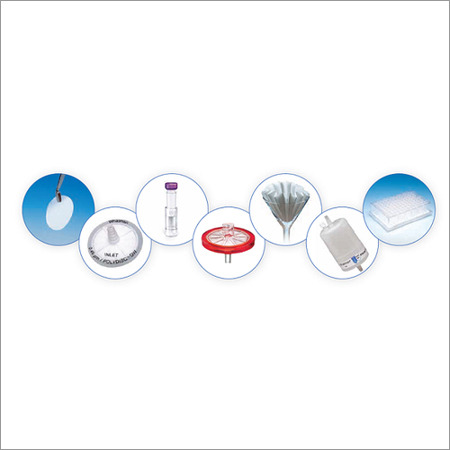
Tell us about your requirement

Price:
Quantity
Select Unit
- 50
- 100
- 200
- 250
- 500
- 1000+
Additional detail
Mobile number
Email

More Products in Laboratory Filtration Products Category
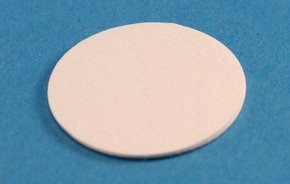
Glass-Fiber Filters
Price 1000 INR / Unit
Minimum Order Quantity : 1 Unit
Color : Cream
Weight : 1.5 Kilograms (kg)
Product Type : GlassFiber Filters
Material : Glass
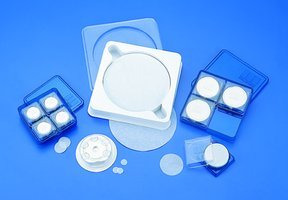
Filter membranes
Price 1000 INR / Unit
Minimum Order Quantity : 1 Unit
Color : White and Blue
Weight : 1.5 Kilograms (kg)
Product Type : Filter Membranes
Material : Hydrophobic Polytetrafluo
Filtering Bottle Flask
Price 1000 INR / Unit
Minimum Order Quantity : 1 Unit
Color : White
Weight : 1.5 Kilograms (kg)
Product Type : Bottle Flask
Material : Borosilicate Glass
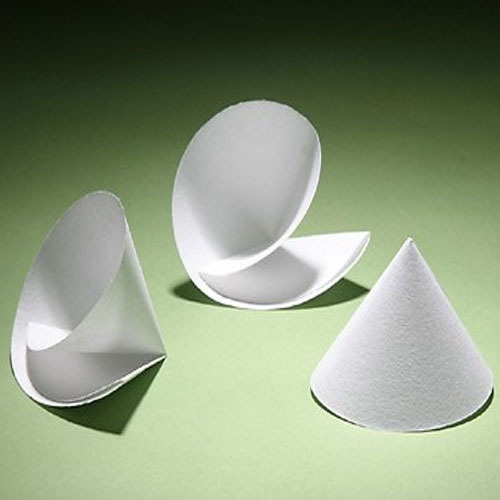
Filter Papers
Price 1000 INR / Unit
Minimum Order Quantity : 1 Unit
Color : White
Weight : 1.5 Kilograms (kg)
Product Type : Filter Papers
Material : Paper

Contact Details

- 104 / 14 B, Muljinagar society, Nizampura,Vadodara - 390002, Gujarat, India
- Phone :07971670415

- Mr Mr Chintak (Partner)
- Mobile :07971670415
- Send Inquiry
 Send Inquiry

 Send Inquiry
 Send SMS
CHINTAN ENTERPRISE
All Rights Reserved.(Terms of Use)
Developed and Managed by Infocom Network Private Limited.
Developed and Managed by Infocom Network Private Limited.
