Trusted company that deals in Quality-made products


 Send Inquiry
Filter membranes
Price 1000 INR/ Unit
MOQ : 1 Unit
Filter membranes Specification
- Control Type
- Manual
- Glass Type
- Borosilicate (for glass fiber type)
- Temperature Resistance
- Up to 180C (depends on material)
- Shape
- Round/Circular
- Accuracy
- Micron Rating Precision as per type
- Features
- High chemical resistance, High Flow Rate, Low protein binding, Uniform pore structure
- Type
- Filter Membrane
- Dimension (L*W*H)
- 47 mm diameter (Standard, other sizes available)
- Product Type
- Filter Membranes
- Equipment Type
- Laboratory Filter Membrane
- Weight
- 1.5 Kilograms (kg)
- Color
- White and Blue
- Equipment Materials
- Polypropylene, Glass Fiber, Polycarbonate, Nylon, PTFE, PES, MCE
- Width
- 75 Millimeter (mm)
- Material
- Hydrophobic Polytetrafluo
- Application
- Laboratory Filtration, Water Purification, Analytical Testing, Industrial Process Filtration
- Capacity (Ltr)
- Varies by application and holder
- Usage
- Single-use, disposable
- Filtration Diameter
- 13 mm, 25 mm, 47 mm, 90 mm and custom sizes
- Thickness
- Varies by membrane type (for example, 130 m for MCE)
- Packaging
- Individually Packed or in Bulk Packs
- Compatibility
- Compatible with most standard filtration apparatus
- Flow Rate
- Optimized by type and pore size
- Color
- White/Translucent/Opaque (depends on material)
- Pore Size
- 0.1 m, 0.22 m, 0.45 m, 1.2 m, and others as available
- Sterility
- Sterile or Non-Sterile options available
- Edge Type
- Plain or Gridded
Filter membranes Trade Information
- Minimum Order Quantity
- 1 Unit
- Supply Ability
- 1 Unit Per Week
- Delivery Time
- 1 Week
- Main Domestic Market
- All India
About Filter membranes
Filter membranes, Durapore PVDF
Properties
Related Categories | Filter membranes, Durapore PVDF, Filtration Supplies,Labware, Manufacturer Browser, Membrane Filters, |
mfr. no. | Millipore GVWP01300 |
| Millipore, GVWP01300 |
diam. | 13 mm |
pore size | 0.22 m pore size |
Description
General description
Autoclavable to 135C.
Excellent chemical compatibility (except ketones, esters, amines, trifluoroacetic acid)
Durapore hydrophilic membranes are ideal for clarification of protein solutions. Protein binding is on the order of 1 g/cm2, two orders of magnitude lower than nylon, nitrocellulose, or PTFE.
Precision in Every Filtration
With a range of pore sizes-0.1 m, 0.22 m, 0.45 m, 1.2 m, and more-our filter membranes deliver precise separation for laboratory, analytical, and industrial filtration. The uniform pore structure ensures consistent flow rates and reliable retention, providing confidence in your filtration outcomes.
Customization and Compatibility
Our membranes are offered in multiple sizes, edge styles, and sterility options to match your unique protocols. They are compatible with most standard filtration systems, making integration into existing setups straightforward for laboratories and industrial users alike.
High-Performance Materials and Features
Manufactured using resilient materials such as hydrophobic PTFE, polypropylene, and borosilicate glass fiber, these membranes exhibit superior chemical resistance and temperature tolerance up to 180C. Advanced design elements ensure low protein binding, high flow rates, and long-lasting single-use reliability.
FAQ's of Filter membranes:
Q: What are the available pore sizes for these filter membranes and how do I select the right one for my application?
A: Our filter membranes are available in pore sizes including 0.1 m, 0.22 m, 0.45 m, 1.2 m, and others upon request. The choice depends on your filtration requirements-smaller pores are ideal for sterilization or fine particulate removal, while larger ones are suited for pre-filtration or clarification tasks.Q: What materials are these membranes made from and how does material choice affect performance?
A: We offer membranes in hydrophobic PTFE, polypropylene, glass fiber, polycarbonate, nylon, PES, and MCE. Each material offers different benefits: PTFE for chemical resistance, glass fiber for high flow and temperature tolerance, and polycarbonate for clarity and uniformity. Select based on your chemical compatibility and filtration needs.Q: How should these filter membranes be used and are they compatible with common filtration apparatus?
A: These membranes are designed for single-use filtration in laboratory or industrial settings. They are compatible with most standard filtration devices. Simply install the membrane using appropriate holders, ensuring a secure and proper seal for optimal results.Q: In what packaging and sterilization formats are the membranes supplied?
A: Our filter membranes are available individually packed or in bulk, in both sterile and non-sterile versions. Choose individually packed, sterile membranes for sensitive applications like analytical testing, or bulk non-sterile membranes for routine or high-throughput filtration.Q: Where can these membranes be used and what applications are they suited for?
A: They are suitable for laboratory filtration, water purification processes, analytical testing, and industrial process filtration. The variety of materials and pore sizes allow application-specific customization-whether for sensitive biological work or industrial liquid processing.Q: What are the benefits of features such as low protein binding and high flow rate in these membranes?
A: Low protein binding is essential for biological and pharmaceutical filtration, as it prevents sample loss and ensures accurate results. High flow rates facilitate efficient processing without compromising retention, saving valuable time during filtration tasks.Q: How does the membrane's temperature resistance and chemical compatibility impact its usage?
A: With temperature tolerances up to 180C (depending on material), these membranes can handle filtration of hot fluids or sterilization steps. Their high chemical resistance ensures suitability for a broad range of solvents, acids, and bases, extending their usability in diverse laboratory and industrial environments.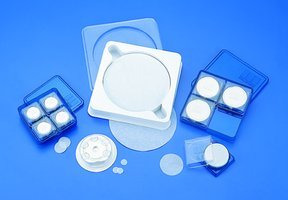
Tell us about your requirement

Price:
Quantity
Select Unit
- 50
- 100
- 200
- 250
- 500
- 1000+
Additional detail
Mobile number
Email

More Products in Laboratory Filtration Products Category
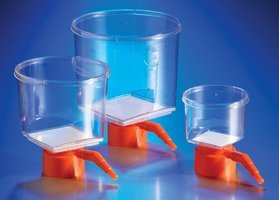
Bottle-Top Vacuum Filters
Price 1000 INR / Unit
Minimum Order Quantity : 1 Unit
Material : Sterile plastic body with membrane filter
Weight : 1.5 Kilograms (kg)
Product Type : Vacuum Filters
Color : White and Orange
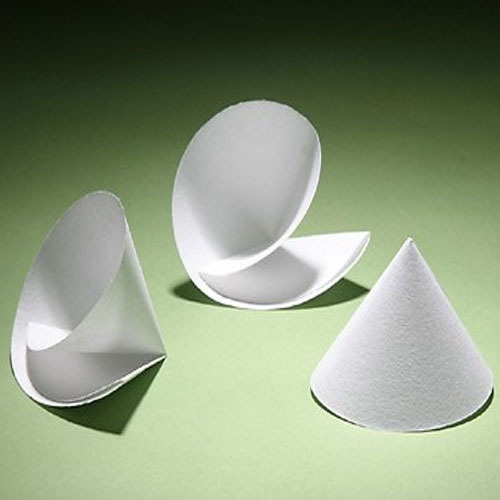
Filter Papers
Price 1000 INR / Unit
Minimum Order Quantity : 1 Unit
Material : Paper
Weight : 1.5 Kilograms (kg)
Product Type : Filter Papers
Color : White
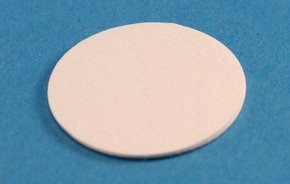
Glass-Fiber Filters
Price 1000 INR / Unit
Minimum Order Quantity : 1 Unit
Material : Glass
Weight : 1.5 Kilograms (kg)
Product Type : GlassFiber Filters
Color : Cream
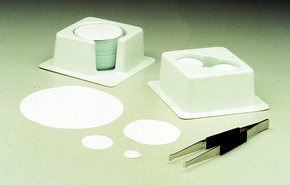
Pall Membrane Filters
Price 1000 INR / Unit
Minimum Order Quantity : 1 Unit
Material : Nylon
Weight : 1.5 Kilograms (kg)
Product Type : Pall Membrane Filters
Color : White

Contact Details

- 104 / 14 B, Muljinagar society, Nizampura,Vadodara - 390002, Gujarat, India
- Phone :07971670415

- Mr Mr Chintak (Partner)
- Mobile :07971670415
- Send Inquiry
 Send Inquiry

 Send Inquiry
 Send SMS
CHINTAN ENTERPRISE
All Rights Reserved.(Terms of Use)
Developed and Managed by Infocom Network Private Limited.
Developed and Managed by Infocom Network Private Limited.
