Trusted company that deals in Quality-made products


 Send Inquiry
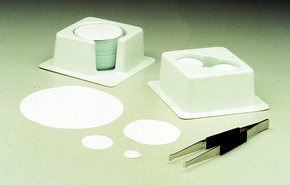
Filter Papers
Price 1000 INR/ Piece
MOQ : 1 Ton
Filter Papers Specification
- Control Type
- Manual
- Speed Range
- Varies by grade; medium to fast
- Accuracy
- High Retention (varies by grade)
- Features
- Ashless, Acid-washed, High wet strength, Smooth surface
- Shape
- Round (most common)
- Temperature Resistance
- Up to 120C
- Type
- Filter Paper
- Dimension (L*W*H)
- 90 mm (standard), other sizes available
- Product Type
- Filter Papers
- Weight
- 1.5 Kilograms (kg)
- Equipment Type
- Laboratory Filter Paper
- Color
- White
- Equipment Materials
- Cellulose Fibers
- Width
- 50 Centimeter (cm)
- Material
- Paper
- Application
- Laboratory Filtration, Analytical Separation, Chemical Analysis
- Capacity (Ltr)
- Depends on paper size and application
- Color
- White
- Ash Content
- <0.007% (ashless type)
- Retention Capacity
- 11 m to 2.5 m (grade-dependent)
- Filtration Rate
- Approx. 40-100 seconds (depends on grade)
- Grade Available
- Whatman equivalent 1, 40, 41, and others
- Sterility
- Non-sterile (unless specified)
- Pack Size
- Typically 100 circles per pack
- Water Absorption
- High
- pH Range
- Generally 5-8
Filter Papers Trade Information
- Minimum Order Quantity
- 1 Ton
- Supply Ability
- 1 Ton Per Week
- Delivery Time
- 1 Week
- Main Domestic Market
- All India
About Filter Papers
For production of the high quality MN filter papers we use cotton linters, refined pulp with a high level of a-cellulose as well as glass fibres. Cotton linters are short-fibred seed hairs from cotton seeds, which cannot be used for textile purposes, but which are highly suitable for the manufacture of soft and absorbent filter papers.
In addition to cotton linters we use mainly pulp, which is obtained by chemical treatment of plant materials, e.g. coniferous or deciduous wood. At MACHEREY-NAGEL only the most experienced paper specialists select the raw materials in order to ensure the continuosly high quality of our filter papers.
For the manufacturing of MN glass fibre filters we use staple fibres made from borosilicate glass (exception: paper from quartz fibres). With a diameter of 0.5 1.5 m these glass fibres are considerably thinner than cellulose fibres. One of the most important feature of glass fibre filters is their resistance almost all chemicals (exception e.g. hydrogen fluoride).
Premium Performance for Laboratory Filtration
Engineered for accuracy and consistency, these filter papers deliver high-quality separations in laboratory processes. Their ashless and acid-washed qualities make them ideal for analytical tasks requiring minimal residue. The papers' smooth surface, medium to fast filtration speed, and high wet strength contribute to their widespread use in research, industrial, and educational laboratories.
Diverse Applications Across Scientific Fields
Suitable for a wide variety of laboratory purposes such as chemical analysis, sample clarification, and precise particulate retention, these filter papers meet the stringent demands of different scientific workflows. Whether you are conducting qualitative or quantitative analysis, choosing the right grade ensures optimal results for your application.
FAQ's of Filter Papers:
Q: How do I select the right filter paper grade for my laboratory application?
A: The choice of filter paper grade depends on the required filtration rate, particle retention, and application type. For general laboratory use, Whatman equivalent grade 1 offers mid-range retention and flow. Grade 40 is favored for quantitative analysis due to its fine retention, while grade 41 provides rapid filtration. Consider your sample type and analytical requirements when selecting a grade.Q: What are the main benefits of using ashless filter papers in analytical separation?
A: Ashless filter papers contain less than 0.007% ash, leaving negligible residue after burning. This feature is crucial for gravimetric and quantitative analyses, as it ensures results are not skewed by inorganic contaminants, offering high accuracy and reliability in sensitive laboratory determinations.Q: When should I use non-sterile filter paper, and how is sterility specified?
A: Non-sterile filter papers are suitable for most standard chemical analysis and filtration tasks where microbial contamination is not a concern. If your experimental protocol requires sterile conditions (e.g., certain microbiological applications), always verify and specify the sterility of the papers before use.Q: Where are these filter papers most commonly used?
A: These filter papers are extensively employed in scientific laboratories, research institutions, academic environments, and industrial quality control labs across India and globally. They are favored for chemical analysis, sample purification, and analytical separation tasks.Q: What is the process for using laboratory filter papers effectively?
A: To use filter paper, select the appropriate size and grade, place it in a compatible funnel or filtration apparatus, and pour your prepared sample onto the paper. The sample will pass through the filter, leaving behind particulates or residues, while the filtrate collects below for subsequent analysis.Q: How does the filtration rate relate to grade, and why does it matter?
A: The filtration rate, ranging from approximately 40-100 seconds (depending on the grade), indicates how quickly liquid passes through the filter paper. Faster filtration rates (lower retention) are ideal for large particulates, whereas slower rates (higher retention) are better for fine particles. Matching grade to sample ensures efficient processing and accurate results.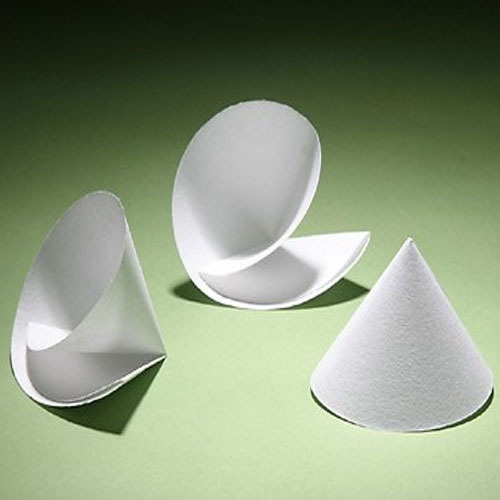
Tell us about your requirement

Price:
Quantity
Select Unit
- 50
- 100
- 200
- 250
- 500
- 1000+
Additional detail
Mobile number
Email

More Products in Laboratory Filtration Products Category
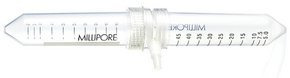
Centrifuge Tube Filter Unit
Price 1000 INR / Piece
Minimum Order Quantity : 1 Ton
Color : White
Material : Polypropylene
Product Type : Tube Filter
Height : 138 Millimeter (mm)
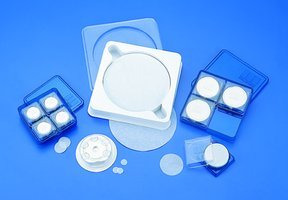
Filter membranes
Price 1000 INR / Piece
Minimum Order Quantity : 1 Ton
Color : White and Blue
Material : Hydrophobic Polytetrafluo
Product Type : Filter Membranes
Filtering Bottle Flask
Price 1000 INR / Piece
Minimum Order Quantity : 1 Ton
Color : White
Material : Borosilicate Glass
Product Type : Bottle Flask
Height : 184 Millimeter (mm)
Pall Membrane Filters
Price 1000 INR / Piece
Minimum Order Quantity : 1 Ton
Color : White
Material : Nylon
Product Type : Pall Membrane Filters
Height : 8.9 Centimeter (cm)

Contact Details

- 104 / 14 B, Muljinagar society, Nizampura, Vadodara - 390002, Gujarat, India
- Phone :07971670415

- Mr Chintak (Partner)
- Mobile :07971670415
- Send Inquiry
 Send Inquiry

 Send Inquiry
 Send SMS
 Call Me Free
CHINTAN ENTERPRISE
All Rights Reserved.(Terms of Use)
Developed and Managed by Infocom Network Private Limited.
Developed and Managed by Infocom Network Private Limited.
