Trusted company that deals in Quality-made products


 Send Inquiry
Laboratory Flasks
Price 1000 INR/ Piece
MOQ : 1 Piece
Laboratory Flasks Specification
- Accuracy
- Calibrated (Class A or B as per model)
- Temperature Resistance
- Up to 450C
- Shape
- Round bottom, conical (Erlenmeyer), flat bottom
- Heating Capacity
- Withstands direct flame and heating mantle
- Control Type
- Manual
- Features
- Chemical resistance, thermal shock resistance, easy to clean, autoclavable
- Glass Type
- Borosilicate
- Type
- Laboratory Flask
- Dimension (L*W*H)
- Varies (commonly 50-500 mm height depending on capacity)
- Size
- 8-20 Inch
- Product Type
- Laboratory Flasks
- Equipment Type
- Glassware
- Weight
- 1.5 Kilograms (kg)
- Equipment Materials
- Borosilicate Glass
- Color
- White
- Material
- Glass
- Application
- Laboratory chemical processing, mixing, heating and storing solutions
- Capacity (Ltr)
- Varies (commonly 50 mL to 5000 mL)
- Compliance
- ISO/ASTM standards
- Sterilizability
- Can be sterilized by autoclaving or dry heat
- Color
- Clear (Transparent)
- Neck Type
- Narrow or wide mouth depending on flask type
- Graduation Marks
- Yes, for volumetric accuracy
- Usage Environment
- Suitable for laboratory, research, educational institutions and industrial settings
- Autoclavable
- Yes
- Resistant To
- Acids, alkalis, organic solvents
- Stopper Type
- With or without glass/polypropylene stopper
Laboratory Flasks Trade Information
- Minimum Order Quantity
- 1 Piece
- Supply Ability
- 1 Piece Per Week
- Delivery Time
- 1 Week
- Main Domestic Market
- All India
Laboratory Flasks About
We are manufacturing and exporting the Laboratory Flasks for our customers. The offered flasks are used for containing liquid and performing mixing, heating, cooling, precipitation, condensation and other processes. Along with their elongated neck, these laboratory flasks come with their precise volume. Also, the offered flasks come with a stopper or cap for capping the opening at the top of the neck.Features:
- Good resistance to heat
- Precise volume
- Light weight
Exceptional Chemical and Thermal Resistance
Constructed from high-quality borosilicate glass, these laboratory flasks offer outstanding resistance to acids, alkalis, and organic solvents. Their construction allows them to withstand rapid temperature changes, making them suitable for sterilization by autoclaving or dry heat. Whether in industrial, research, or educational settings, these flasks deliver reliability and durability under rigorous laboratory conditions.
Accurate Measurement and Easy Handling
All our laboratory flasks come with clear, permanent graduation marks that provide accurate volume measurements for chemical processes. The ergonomic design, available in narrow or wide mouth configurations, ensures easy filling, pouring, and cleaning. Stoppers are optionally available in glass or polypropylene to ensure safety and versatility during use.
FAQ's of Laboratory Flasks:
Q: How can these laboratory flasks be sterilized for repeated use?
A: These laboratory flasks are designed to be sterilized using either autoclaving or dry heat methods. The borosilicate glass construction ensures they can withstand high temperatures up to 450C without compromising structural integrity.Q: What advantages does borosilicate glass provide in laboratory flasks?
A: Borosilicate glass offers superior chemical resistance to acids, alkalis, and organic solvents, as well as excellent thermal shock resistance. This makes the flasks durable and safe for various laboratory processes, including heating, mixing, and storing solutions.Q: When is it preferable to choose a narrow mouth versus a wide mouth flask?
A: Narrow mouth flasks are ideal for minimizing evaporation and splashing during mixing or heating, while wide mouth flasks facilitate easier filling, cleaning, or adding larger solids. Select based on your experimental requirements.Q: Where are these laboratory flasks typically used?
A: These flasks are suitable for laboratories, research institutions, educational facilities, as well as industrial environments. Their robust features support chemical processing, sample storage, and solution mixing across diverse scientific fields.Q: What process ensures the volumetric accuracy of these laboratory flasks?
A: Each flask is calibrated according to Class A or Class B standards as per ISO/ASTM regulations. Clear graduation marks provide precise measurement and confidence during analytical or preparative work.Q: How do the stoppers benefit laboratory operations?
A: Stoppers, available in glass or polypropylene, provide secure closure for safe storage, minimize contamination risks, and help prevent solution evaporation. They also allow flexibility to match specific experimental or storage needs.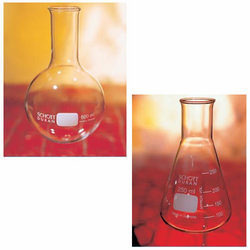
Tell us about your requirement

Price:
Quantity
Select Unit
- 50
- 100
- 200
- 250
- 500
- 1000+
Additional detail
Mobile number
Email

More Products in Laboratory Glasswares Category
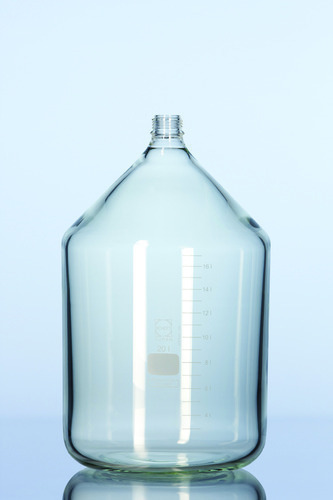
Duran Production Bottles
Price 1000 INR / Piece
Minimum Order Quantity : 1 Piece
Material : Glass
Color : White
Product Type : Production Bottles
Weight : 1.5 Kilograms (kg)
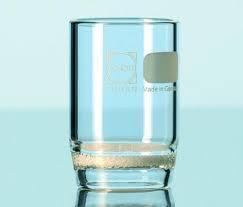
Glass Sintered Discs
Price 1000 INR / Piece
Minimum Order Quantity : 1 Piece
Material : Glass
Color : White
Product Type : Glass Sintered Discs
Weight : 1.5 Kilograms (kg)
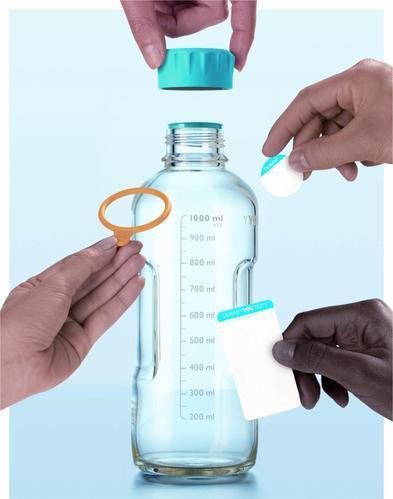
Laboratory Utility Bottles
Price 1000 INR / Piece
Minimum Order Quantity : 1 Piece
Material : Glass
Color : White
Product Type : Laboratory Utility Bottles
Weight : 1.5 Kilograms (kg)
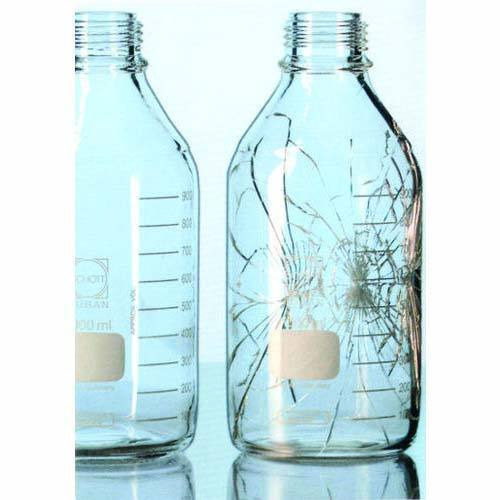
Laboratory Bottles Protect Duran
Price 1000 INR / Piece
Minimum Order Quantity : 1 Piece
Material : Glass
Color : White
Product Type : Laboratory Bottles
Weight : 1.5 Kilograms (kg)

Contact Details

- 104 / 14 B, Muljinagar society, Nizampura,Vadodara - 390002, Gujarat, India
- Phone :07971670415

- Mr Mr Chintak (Partner)
- Mobile :07971670415
- Send Inquiry
 Send Inquiry

 Send Inquiry
 Send SMS
CHINTAN ENTERPRISE
All Rights Reserved.(Terms of Use)
Developed and Managed by Infocom Network Private Limited.
Developed and Managed by Infocom Network Private Limited.
