Trusted company that deals in Quality-made products


 Send Inquiry
Glass Sintered Discs
Price 1000 INR/ Piece
MOQ : 1 Piece
Glass Sintered Discs Specification
- Temperature Resistance
- Up to 500C
- Control Type
- Passive (no active controls)
- Accuracy
- Standard laboratory accuracy
- Glass Type
- Borosilicate
- Features
- Chemically resistant, Thermal shock resistant, High mechanical strength
- Shape
- Round
- Type
- Glass Sintered Disc
- Dimension (L*W*H)
- Available in multiple diameters (e.g., 25 mm, 35 mm, 50 mm, 70 mm, 90 mm)
- Size
- 8-20 Inch
- Product Type
- Glass Sintered Discs
- Weight
- 1.5 Kilograms (kg)
- Equipment Type
- Laboratory Filtration Disc
- Equipment Materials
- Borosilicate Glass
- Color
- White
- Material
- Glass
- Application
- Filtration, Vacuum Filtration, Laboratory Separation, Gas Dispersion
- Autoclavable
- Yes
- Pore Size Range
- Fine, Medium, Coarse (e.g., 0-160 microns depending on grade)
- Compatibility
- Suitable for most laboratory filtration assemblies
- Grade Availability
- G0 to G5 (as per ISO standard)
- Maximum Operating Pressure
- 1-2 bar (depending on disc and setup)
- Reusable
- Yes
- Surface Finish
- Porous Sintered
- Color
- Transparent
- Chemical Resistance
- Excellent to most acids, alkalis, and solvents
Glass Sintered Discs Trade Information
- Minimum Order Quantity
- 1 Piece
- Supply Ability
- 1 Piece Per Week
- Delivery Time
- 1 Week
- Main Domestic Market
- All India
Glass Sintered Discs About
Filter Crucibles with Sintered Disc, 15ML & 30ML Porosity G1 to G4, RIVIERA
Filter Crucibles with Sintered Disc, 15ML, 30MLand 50ML - Porosity G1 to G4, DURAN
Funnels, Buchner Type, with Sintered Disc, 35ML, 80ML and 200ML RIVIERA
Funnels, Buchner Type, with Sintered Disc, 50ML, 75ML, 125 ML, 500ML and 1000ML DURAN
Pipeline Filters, with Sintered Disc, Made from Heat Resistant, RIVIERA
Versatile Filtration for Laboratories
Glass Sintered Discs offer superior performance for a wide range of laboratory filtration tasks. Their borosilicate glass construction ensures high mechanical strength and resilience against thermal shock, supporting repeat use in demanding applications. The discs come in various diameters and pore sizes to cater to specific filtration, separation, and gas dispersion requirements.
Robust and Chemically Resistant Material
Manufactured from premium-grade borosilicate glass, these discs exhibit outstanding resistance to most acids, alkalis, and solvents, making them suitable for use with diverse chemical reagents. Their porous sintered surface guarantees consistent filtration while maintaining structural integrity under elevated temperatures and pressures.
Easy Maintenance and Reusability
Designed for laboratory convenience, these discs are easily sterilized by autoclaving and can be reused multiple times without compromising their performance. Their white, round shape allows seamless integration into standard laboratory assemblies, facilitating efficient workflow and cost-effective operation.
FAQ's of Glass Sintered Discs:
Q: How are Glass Sintered Discs used in laboratory filtration?
A: Glass Sintered Discs are typically placed within filtration assemblies to separate solid particles from liquids or gases. Their porous design enables precise retention based on the selected pore size, making them suitable for vacuum filtration, gravity filtration, and gas dispersion applications.Q: What grades and pore size ranges are available for these discs?
A: The discs are available in ISO standard grades G0 through G5, with pore sizes ranging from fine to coarse (0-160 microns depending on the grade). This variety allows users to select the appropriate disc for specific filtration or separation requirements.Q: When should I consider using a fine, medium, or coarse pore size?
A: Fine pore sizes (lower-grade numbers) are ideal for filtering small particulates or sensitive samples, while medium or coarse options are better suited for higher flow rates or larger particulates. The selection depends on the required level of filtration and the nature of the application.Q: Where can these Glass Sintered Discs be integrated?
A: Glass Sintered Discs are compatible with most laboratory filtration setups and equipment. They are available in various diameters (e.g., 25 mm to 90 mm), making them adaptable to a wide range of filtration assemblies and apparatus.Q: What is the process for cleaning and sterilizing the discs?
A: After use, the discs can be cleaned with laboratory detergents or solvents suited to the contaminant. They are fully autoclavable, allowing for sterilization at high temperatures without risk of damage, ensuring safe and repeated usage.Q: What are the main benefits of using borosilicate Glass Sintered Discs?
A: These discs offer excellent chemical and thermal resistance, durability, and high strength, making them reliable for repeated laboratory use. Their ability to withstand temperatures up to 500C and easy reusability contribute to both performance consistency and cost savings.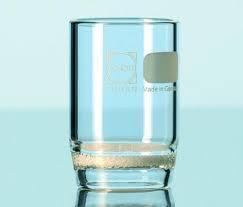
Tell us about your requirement

Price:
Quantity
Select Unit
- 50
- 100
- 200
- 250
- 500
- 1000+
Additional detail
Mobile number
Email

More Products in Laboratory Glasswares Category
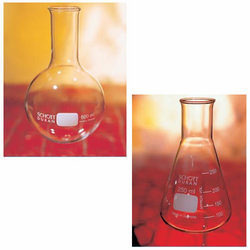
Laboratory Flasks
Price 1000 INR / Piece
Minimum Order Quantity : 1 Piece
Material : Glass
Equipment Materials : Borosilicate Glass
Temperature Resistance : Up to 450C
Type : Other, Laboratory Flask
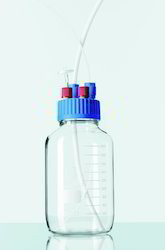
Duran Pressure Plus Bottles
Price 1000 INR / Piece
Minimum Order Quantity : 1 Piece
Material : Glass
Equipment Materials : Borosilicate Glass 3.3, PP Cap, PTFE Seal
Temperature Resistance : 40C to +140C (cap dependent, glass can withstand up to +500C)
Type : Other, Pressure Resistant Laboratory Bottle
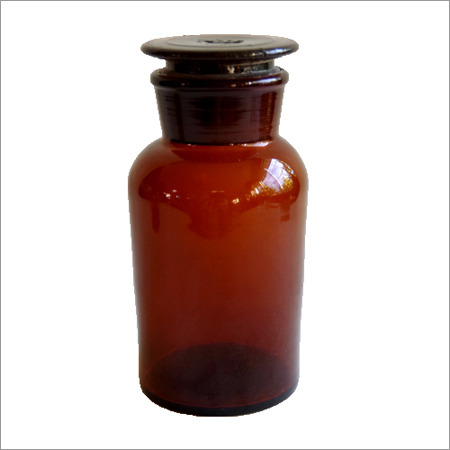
Reagent Bottle
Price 1000 INR / Piece
Minimum Order Quantity : 1 Piece
Material : Glass
Equipment Materials : Borosilicate Glass
Temperature Resistance : Typically up to 121C (autoclavable)
Type : Other, Reagent Bottle
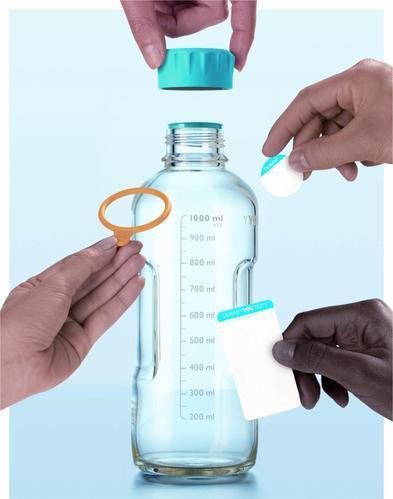
Laboratory Utility Bottles
Price 1000 INR / Piece
Minimum Order Quantity : 1 Piece
Material : Glass
Equipment Materials : Glass
Temperature Resistance : Up to 500C (Depends on glass type)
Type : Other, Laboratory Utility Bottle

Contact Details

- 104 / 14 B, Muljinagar society, Nizampura,Vadodara - 390002, Gujarat, India
- Phone :07971670415

- Mr Mr Chintak (Partner)
- Mobile :07971670415
- Send Inquiry
 Send Inquiry

 Send Inquiry
 Send SMS
 Call Me Free
CHINTAN ENTERPRISE
All Rights Reserved.(Terms of Use)
Developed and Managed by Infocom Network Private Limited.
Developed and Managed by Infocom Network Private Limited.
