Trusted company that deals in Quality-made products


 Send Inquiry
Laboratory Bottles Protect Duran
Price 1000 INR/ Piece
MOQ : 1 Piece
Laboratory Bottles Protect Duran Specification
- Temperature Resistance
- Up to +135C (with cap off); PU coating up to 135C dry heat
- Features
- Breakage protection, chemical resistance, autoclavable, graduated, UV protection, slip-resistant
- Glass Type
- BOROSILICATE 3.3 GLASS
- Shape
- Round with wide neck
- Type
- Laboratory Bottle
- Dimension (L*W*H)
- Varies by capacity; standard heights for each volume
- Product Type
- Laboratory Bottles
- Equipment Type
- Laboratory Storage Bottle
- Weight
- 1.5 Kilograms (kg)
- Equipment Materials
- Borosilicate glass with PU protective coating
- Color
- White
- Width
- 2.70 Millimeter (mm)
- Material
- Glass
- Application
- Safe storage, mixing, and transport of laboratory liquids and media
- Capacity (Ltr)
- Available in 0.1, 0.25, 0.5, 1.0, 2.0, and 5.0 Litres
- Protective Coating
- Transparent polyurethane for enhanced durability and safe handling
- UV Light Protection
- Yes, reduced UV transmission through coated glass
- Autoclavable
- Yes, including PU coating and cap
- Graduation Markings
- Clear white, printed scale for quick volume checks
- Neck Thread
- GL45 standard thread
- Chemical Resistance
- High - suitable for acids, alkalis, and solvents
- Cap Color
- Typically blue (Polypropylene) screw cap
Laboratory Bottles Protect Duran Trade Information
- Minimum Order Quantity
- 1 Piece
- Supply Ability
- 1 Piece Per Week
- Delivery Time
- 1 Week
- Main Domestic Market
- All India
About Laboratory Bottles Protect Duran
Laboratory Bottles Protect (plastic coated) with gl45 & gl80 necks, duran- The resistant and transparent copolymer based plastic coating bonds firmly with the glass surface and performs the following functions:
- Protects the glass surface against mechanical damage (Scratch protection)
- Holds the fragments together in the event of the glass breaking (Splinter protection)
- Minimises liquid loss in the event of the glass breaking (Protection against contents escaping and spraying)
- Absorbs UV rays upto a light wavelength of 380 nm (Light protection)
- Do not expose Protect bottles to open flames or direct heat, e.g. on a laboratory hot plate. The maximum operating temperature is 135C. Bottle should not be exposed to this temperature for more than 30 minutes.
- Protect bottles are suitable for freezing (-30C)and it can also be used in microwaves. However, the plastic coating does not increase the permissible pressure at which they can be used.
Enhanced Safety and Durability
These laboratory bottles are equipped with a transparent polyurethane (PU) coating, delivering superior breakage protection and slip resistance. The robust borosilicate glass foundation ensures strength while the PU layer minimizes the risk of hazardous spills and glass fragments, making laboratory work safer and more reliable.
Versatile Chemical Resistance
Protect Duran bottles are highly resistant to acids, alkalis, and a broad spectrum of laboratory solvents. The quality borosilicate 3.3 glass, paired with the PU coating, preserves bottle integrity and sample purity even during extended exposure to aggressive chemicals, supporting both daily operations and specialized experimental tasks.
Efficient Volume Management and Usability
Featuring bold, clear white graduation markings, these bottles allow for precise and rapid volume checks. The standard GL45 thread and wide neck design accommodate straightforward filling, pouring, and cleaning, enhancing workflow efficiency in busy laboratory settings.
FAQ's of Laboratory Bottles Protect Duran:
Q: How should Protect Duran laboratory bottles be properly autoclaved?
A: To autoclave Protect Duran laboratory bottles, leave the polypropylene screw cap slightly loose and ensure the bottle is clean. Both the borosilicate glass with PU coating and the cap are autoclavable up to +135C. Make sure the bottle is cooled gradually after sterilization to maintain integrity.Q: What are the benefits of the polyurethane protective coating on these bottles?
A: The transparent polyurethane coating significantly increases breakage resistance, providing safer handling and reducing the risk of injury or sample loss. It also offers slip resistance and limits UV light transmission, protecting light-sensitive contents.Q: When is it appropriate to use these laboratory bottles for chemical storage?
A: These bottles are ideal when working with acids, alkalis, and solvents due to their high chemical resistance. Choose them for tasks involving secure storage, mixing, or transport of lab liquids, especially when breakage protection and UV shielding are required.Q: Where can these laboratory bottles be used effectively?
A: Protect Duran bottles are suitable for laboratories in educational institutions, industrial settings, research facilities, and pharmaceutical environments - anywhere safe and reliable storage of hazardous or sensitive liquids is imperative.Q: What process ensures the accuracy of the graduation markings on the bottles?
A: The graduation scales are printed in clear white using a durable and chemically resistant ink, ensuring visibility and reliability for accurate volume assessment, even after repeated use and washing.Q: How does the UV protection feature benefit laboratory applications?
A: Reduced UV light transmission through the coated glass helps preserve the integrity of light-sensitive samples, preventing degradation and maintaining sample reliability during handling and storage.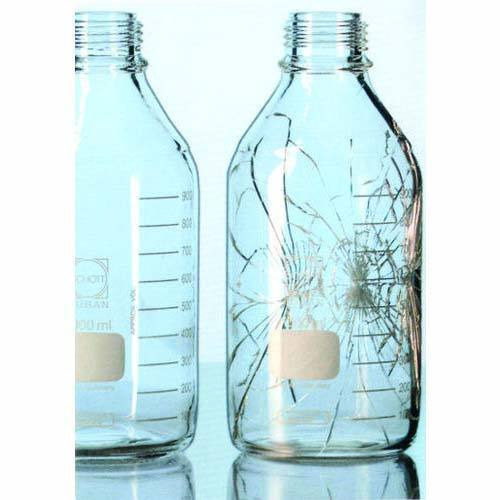
Tell us about your requirement

Price:
Quantity
Select Unit
- 50
- 100
- 200
- 250
- 500
- 1000+
Additional detail
Mobile number
Email

More Products in Laboratory Glasswares Category
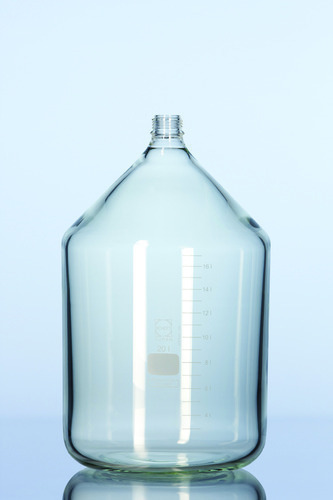
Duran Production Bottles
Price 1000 INR / Piece
Minimum Order Quantity : 1 Piece
Material : Glass
Product Type : Production Bottles
Color : White
Weight : 1.5 Kilograms (kg)
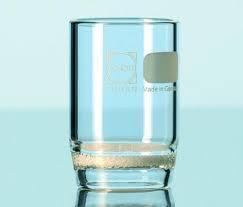
Glass Sintered Discs
Price 1000 INR / Piece
Minimum Order Quantity : 1 Piece
Material : Glass
Product Type : Glass Sintered Discs
Color : White
Weight : 1.5 Kilograms (kg)
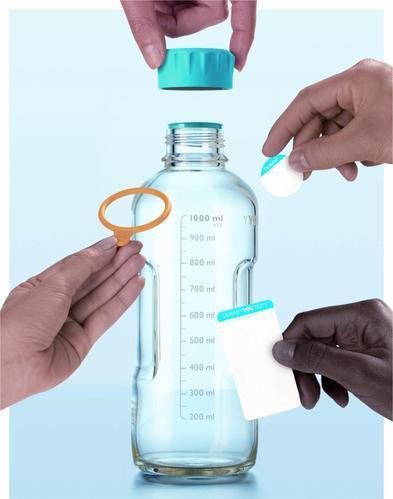
Laboratory Utility Bottles
Price 1000 INR / Piece
Minimum Order Quantity : 1 Piece
Material : Glass
Product Type : Laboratory Utility Bottles
Color : White
Weight : 1.5 Kilograms (kg)
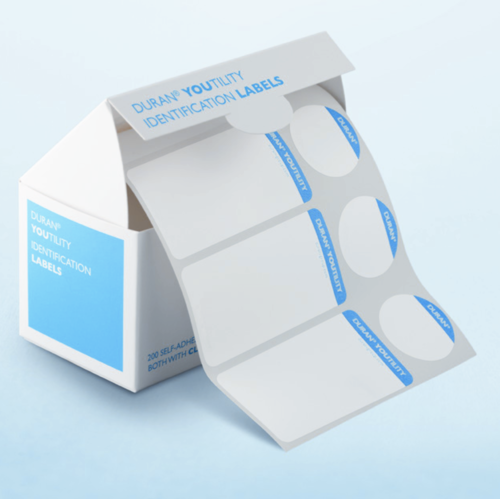
Youtility Bottles Self Adhesive Label Sets
Price 1000 INR / Piece
Minimum Order Quantity : 1 Piece
Material : White Polyester
Product Type : Youtility Bottles
Color : White
Weight : 1.5 Kilograms (kg)

Contact Details

- 104 / 14 B, Muljinagar society, Nizampura,Vadodara - 390002, Gujarat, India
- Phone :07971670415

- Mr Mr Chintak (Partner)
- Mobile :07971670415
- Send Inquiry
 Send Inquiry

 Send Inquiry
 Send SMS
CHINTAN ENTERPRISE
All Rights Reserved.(Terms of Use)
Developed and Managed by Infocom Network Private Limited.
Developed and Managed by Infocom Network Private Limited.
