Trusted company that deals in Quality-made products


 Send Inquiry
Filteres Membranfor microbiological analysis
Price 1000 INR/ Unit
MOQ : 1 Unit
Filteres Membranfor microbiological analysis Specification
- Accuracy
- High retention efficiency for microorganisms
- Shape
- Round
- Control Type
- Manual
- Temperature Resistance
- Up to 130C
- Features
- Hydrophilic, high flow rate, high retention, easy handling
- Type
- Filter membrane
- Size
- 2-5 Inch
- Dimension (L*W*H)
- 47 mm diameter
- Product Type
- Filteres Membranfor
- Weight
- 1.5 Kilograms (kg)
- Equipment Type
- Laboratory filtration
- Color
- White
- Equipment Materials
- Cellulose nitrate membrane
- Material
- Cellulose nitrate
- Application
- Microbiological analysis, water testing, sterility testing
- Capacity (Ltr)
- Dependent on filter volume, typically up to 250 mL/batch
- Sterility
- Available in sterile and non-sterile variants
- Color
- White (plain or gridded options)
- Filtration Area
- 13.8 cm2 (for 47 mm diameter)
- Maximum Operating Pressure
- 5 bar (72 psi)
- Surface
- Smooth or gridded
- Packaging
- Individually packed or in multiples (boxes of 100)
- Thickness
- 150-200 m
- Pore Size
- 0.22 m or 0.45 m
Filteres Membranfor microbiological analysis Trade Information
- Minimum Order Quantity
- 1 Unit
- Supply Ability
- 1 Unit Per Week
- Delivery Time
- 1 Week
- Main Domestic Market
- All India
About Filteres Membranfor microbiological analysis
Properties
| Related Categories | Filter membranes for microbiological analysis, Filtration,Filtration Supplies, Labware, Manufacturer Browser |
| material | cellulose acetate/cellulose nitrate mixed esters both filters |
| mfr. no. | Millipore HAWG047S6 |
| Millipore, HAWG047S6 | |
| Millipore, HAWG047S6 | |
| Millipore, HAWG047S6 | |
| pore size | 0.45 m (HA) |
Description
General description
Filter type HC, 0.7 m pore size, is designed for improved recovery of stressed fecal coliform organisms, especially those found in chlorinated effluents. The larger pore size permits faster filtration if the water sample has a higher particulate burden.
Both filters are cellulose acetate/cellulose nitrate mixed esters.
S-Kit includes filter membrane plus absorbent pad, sterile, individually sealed, packed in 100s in dispenser tubes.
S-Pak includes filter membrane, sterile, individually sealed.
Filter type HA, 0.45 m pore size, is designed to give complete retention and maximum recovery of total coliforms and fecal coliform bacteria. Complies with applicable U.S. EPA Standard methods and ASTM specifications for membrane filters used for drinking water analysis.
High-Efficiency Microbial Filtration
Engineered from cellulose nitrate, these membrane filters are effective for capturing microorganisms during water and sterility testing. Their specified pore sizes-0.22 m and 0.45 m-contribute to high retention and accuracy, integral for a range of analytical laboratory methods.
Adaptable to Laboratory Demands
Available in both sterile and non-sterile forms, each round filter (47 mm diameter) can process up to 250 mL per batch. The membranes are temperature-resistant up to 130C and can operate under a maximum pressure of 5 bar, ensuring reliability for various testing procedures.
User-Centric Packaging and Design
These filter membranes are provided individually or in boxes of 100, allowing flexibility in inventory management. Their hydrophilic nature, smooth or gridded surfaces, and easy manual operation guarantee swift setup and efficient throughput in any laboratory setting.
FAQ's of Filteres Membranfor microbiological analysis:
Q: How do I select the appropriate pore size for my microbiological analysis?
A: Choose a 0.22 m membrane for finer retention, suitable for filtering bacteria and smaller microorganisms, or opt for 0.45 m when targeting larger microbes or particles. Selection depends on the specific protocol and regulatory requirements of your laboratory testing.Q: What are the main benefits of using cellulose nitrate membrane filters for water testing?
A: These filters offer high microbial retention, fast flow rates, and are hydrophilic for efficient sample filtration. Sterile variants prevent contamination, and their temperature and pressure resistance make them ideal for reliable, repeatable results in water and sterility testing.Q: When should I use a sterile versus a non-sterile membrane filter?
A: Sterile membrane filters should be used when testing samples where contamination control is critical, such as sterility assessments. Non-sterile filters are suitable for general analysis where sterility is not a primary concern.Q: Where can I use these membrane filters in the laboratory process?
A: These filters are suitable for manifold filtration setups, vacuum filtration, and standard laboratory filtration assemblies. Their 47 mm diameter fits universally in most microbiological and water quality testing apparatuses.Q: What is the process for handling and installing these membrane filters?
A: With an easy manual control design, handling involves placing the membrane on the filter base using sterile forceps, securing it, and then passing your sample solution through under controlled pressure or vacuum. The hydrophilic properties help facilitate smooth installation and reduced sample loss.Q: How does packaging format impact daily laboratory workflow?
A: Individually packed membranes minimize contamination risks and streamline usage, while bulk boxes of 100 filters optimize throughput in high-volume labs. The right packaging choice supports both small-scale and large-scale laboratory activities efficiently.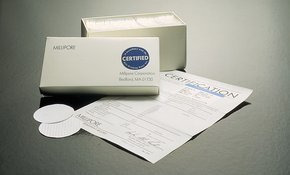
Tell us about your requirement

Price:
Quantity
Select Unit
- 50
- 100
- 200
- 250
- 500
- 1000+
Additional detail
Mobile number
Email

More Products in Laboratory Filtration Products Category
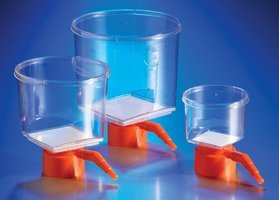
Bottle-Top Vacuum Filters
Price 1000 INR / Unit
Minimum Order Quantity : 1 Unit
Color : White and Orange
Material : Sterile plastic body with membrane filter
Product Type : Vacuum Filters
Features : Disposable, presterilized, easy to use, leakproof, graduated markings
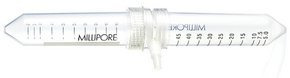
Centrifuge Tube Filter Unit
Price 1000 INR / Unit
Minimum Order Quantity : 1 Unit
Color : White
Material : Polypropylene
Product Type : Tube Filter
Features : Leakproof cap, clear graduations, sterile, disposable, compatible with standard centrifuge rotors
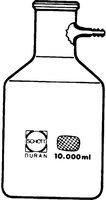
Filtering Bottle Flask
Price 1000 INR / Unit
Minimum Order Quantity : 1 Unit
Color : White
Material : Borosilicate Glass
Product Type : Bottle Flask
Features : Conical shape with sidearm for vacuum connection, graduation markings
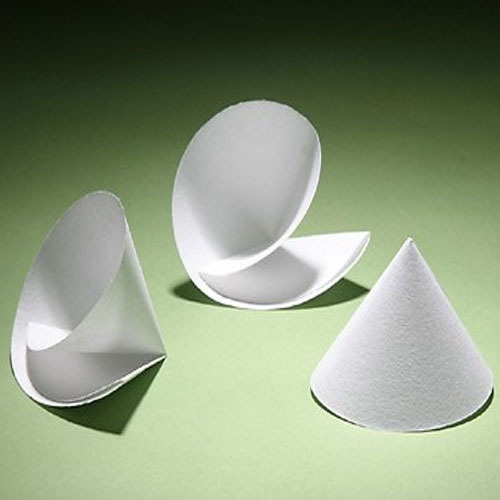
Filter Papers
Price 1000 INR / Unit
Minimum Order Quantity : 1 Unit
Color : White
Material : Paper
Product Type : Filter Papers
Features : Ashless, Acidwashed, High wet strength, Smooth surface

Contact Details

- 104 / 14 B, Muljinagar society, Nizampura,Vadodara - 390002, Gujarat, India
- Phone :07971670415

- Mr Mr Chintak (Partner)
- Mobile :07971670415
- Send Inquiry
 Send Inquiry

 Send Inquiry
 Send SMS
CHINTAN ENTERPRISE
All Rights Reserved.(Terms of Use)
Developed and Managed by Infocom Network Private Limited.
Developed and Managed by Infocom Network Private Limited.
