Trusted company that deals in Quality-made products


 Send Inquiry
Heptane
Price 305 INR/ Kilograms
MOQ : 1 Kilograms
Heptane Specification
- Minimum Order Quantity
- As per requirement
- Refractive Index
- 1.387 (20C)
- Hazard Statement
- Highly flammable liquid and vapor
- Solubility
- Insoluble in water
- UN Number
- UN1206
- Vapor Pressure
- 39 mmHg at 20C
- Odor
- Petroleum-like
- Transport Information
- Hazard class 3 (Flammable Liquid)
Heptane Trade Information
- Minimum Order Quantity
- 1 Kilograms
- Payment Terms
- Cash in Advance (CID), Cash Advance (CA)
- Supply Ability
- 1 Kilograms Per Week
- Delivery Time
- 1 Week
- Main Domestic Market
- All India
About Heptane
HPLC Grade Solvents
grade | for HPLC |
vapor density | 3.5 (vs air) |
vapor pressure | 40 mmHg ( 20 °C) |
| 83 mmHg ( 37.7 °C) |
InChI Key | IMNFDUFMRHMDMM-UHFFFAOYSA |
assay | ≥99% |
autoignition temp. | 433 °F |
Description
Features and Benefits
Greener alternative for hexane
Packaging
1 pkg in Pure-Pac™ 2
100 mL in glass bottle
200 L-P2 in Pure-Pac™ 2
56 L in Pure-Pac™ 1
1, 6×1, 2, 4×2, 4×4 L in glass bottle
20 L in Nowpak™
50 L in Pure-Pac™ 2
Application
Greener alternatives to Hexane in HPLC.
Heptane (n-heptane) may be used to compose the solvent mixtures for the purification of N-acylpyrrolidine derivatives of fatty acid methyl esters (FAMEs) by TLC (Thin Layer Chromatography).
General description
Heptane (n-Heptane) is a linear hydrocarbon. Its cetane number has been reported to be 56.
Recommended products
Discover LiChropur reagents ideal for HPLC or LC-MS analysis
Wide Range of Industrial Applications
Heptane is essential in numerous industries, serving as a solvent in pharmaceuticals, laboratories, and manufacturing adhesives and rubber products. Its high purity ensures reliable results and consistent performance in critical scientific and industrial processes.
Safety and Storage Guidelines
Given its high flammability (flash point: -4C) and volatile nature (vapor pressure: 39 mmHg at 20C), Heptane requires careful storage. It should be kept in tightly closed containers within cool, well-ventilated areas to avoid fire hazards and maintain product quality for up to 24 months.
Customizable Packaging for Diverse Needs
Heptane is available in customizable packaging options such as drums and barrels to cater to varied quantity requirements for laboratories, manufacturers, and exporters. This flexibility makes it convenient to procure the right amount for specific applications.
FAQ's of Heptane:
Q: How should Heptane be properly stored to ensure safety?
A: Heptane should be stored in a cool, well-ventilated area with containers kept tightly closed. As a highly flammable liquid, it must be kept away from sources of ignition and stored following Hazard Class 3 protocols to prevent accidents and maintain product quality.Q: What are the main industrial uses of Heptane?
A: Heptane is primarily used as a laboratory chemical, a solvent in pharmaceuticals, and for dissolving adhesives and rubber in industrial applications. Its high purity and chemical stability make it ideal for precise scientific and manufacturing purposes.Q: When is it necessary to use Heptane instead of other solvents?
A: Heptane is preferred when a non-polar solvent is required, particularly in situations where water insolubility and rapid evaporation are advantageous. Its use is crucial in extraction processes, purity testing, and as a standard in analytical laboratories.Q: Where is Heptane commonly sourced from in India?
A: Heptane can be obtained from reputed distributors, manufacturers, exporters, suppliers, and traders across India. It is available with customizable packaging and order quantities to meet laboratory and industrial scale requirements.Q: What is the process for safe handling of Heptane during transportation?
A: Heptane is classified under UN1206 and Hazard Class 3 as a flammable liquid. During transportation, it must be packed in approved drums or barrels, labeled appropriately, and protected against heat, sparks, and open flames. Adherence to regulatory transport guidelines is mandatory to ensure safety.Q: How can Heptane's benefits enhance laboratory and industrial operations?
A: Heptane provides a high-purity, non-polar solvent option that is effective for dissolving organic compounds, purifying products, and facilitating chemical reactions. Its consistent quality contributes to accuracy and efficiency in laboratory analyses and industrial processing.
Tell us about your requirement

Price:
Quantity
Select Unit
- 50
- 100
- 200
- 250
- 500
- 1000+
Additional detail
Mobile number
Email

More Products in Chromatography Reagents & Solvents Category
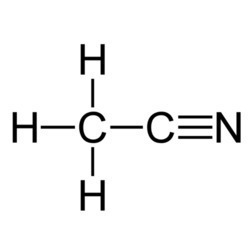
Acetonitrile ( HPLC-GC)
Price 305 INR / Kilograms
Minimum Order Quantity : 1 Kilograms
Appearance : Liquid Liquid
Type : Industrial Lab Chemicals
CAS No : 75058
Usage : Analytical Chemistry, Pharmaceuticals
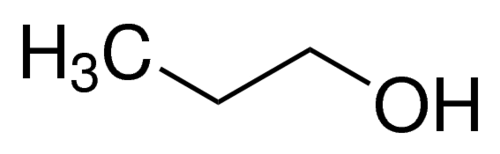
1-Propanol
Price 305 INR / Kilograms
Minimum Order Quantity : 1 Kilograms
Appearance : Colorless Liquid
Type : Industrial Lab Chemicals
CAS No : 71238
Usage : Laboratory reagent, Manufacturing of other chemicals
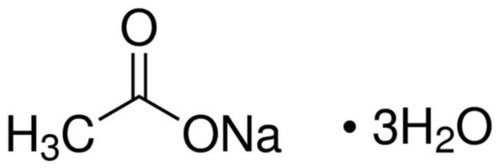
Sodium acetate trihydrate
Price 305 INR / Kilograms
Minimum Order Quantity : 1 Kilograms
Appearance : White powder
Type : Industrial Lab Chemicals
CAS No : 6131904
Usage : Laboratory, Textile processing, Concrete sealant, Food preservative, Acidbase buffer

Potassium dihydrogen phosphate anhydrous
Price 305 INR / Kilograms
Minimum Order Quantity : 1 Kilograms
Appearance : Crystalline Powder
Type : Industrial Lab Chemicals
CAS No : 7778770
Usage : Used as a fertilizer, food additive, buffer, and in pharmaceutical formulations

Contact Details

- 104 / 14 B, Muljinagar society, Nizampura,Vadodara - 390002, Gujarat, India
- Phone :07971670415

- Mr Chintak (Partner)
- Mobile :07971670415
- Send Inquiry
 Send Inquiry

 Send Inquiry
 Send SMS
 Call Me Free
CHINTAN ENTERPRISE
All Rights Reserved.(Terms of Use)
Developed and Managed by Infocom Network Private Limited.
Developed and Managed by Infocom Network Private Limited.
