Trusted company that deals in Quality-made products


 Send Inquiry
Glass-Fiber Filters
Price 1000 INR/ Piece
MOQ : 1 Ton
Glass-Fiber Filters Specification
- Control Type
- Manual
- Temperature Resistance
- Up to 500C
- Features
- High loading capacity, fast flow rate, inert to most chemicals, binder-free, resistant to organic solvents
- Accuracy
- High filtration efficiency, nominal particle retention 0.7-2.7 m
- Shape
- Round
- Glass Type
- Borosilicate Microfiber Glass
- Type
- Glass-Fiber Filter
- Dimension (L*W*H)
- Various sizes available (commonly 47mm, 90mm diameter, customizable)
- Height
- 703.5-746 Millimeter (mm)
- Product Type
- Glass-Fiber Filters
- Equipment Type
- Filtration Media
- Weight
- 1.5 Kilograms (kg)
- Color
- Cream
- Equipment Materials
- Borosilicate glass microfiber
- Material
- Glass
- Application
- Laboratory filtration, air analysis, water analysis, gravimetric analysis, suspended solids testing
- Capacity (Ltr)
- Dependent on application/holder size
- Sterility
- Non-sterile (sterilizable by autoclaving if needed)
- pH Range
- 1-14 (high chemical compatibility)
- Packaging
- Box of 100 filters or as specified
- Wet Strength
- Excellent (remains stable when wet)
- Grade Options
- Grade GF/A, GF/B, GF/C, etc.
- Retention Efficiency
- Up to 99.99% for fine particulate matter
- Thickness
- 0.26 mm (typical for standard filters)
- Color
- White (natural glass color)
Glass-Fiber Filters Trade Information
- Minimum Order Quantity
- 1 Ton
- Supply Ability
- 1 Ton Per Week
- Delivery Time
- 1 Week
- Main Domestic Market
- All India
About Glass-Fiber Filters
Properties
| Related Categories | Filtration Supplies, Glass Fiber Filters, Labware,Manufacturer Browser, Millipore, |
| material | borosilicate glass |
| circles | |
| packaging | pkg of 100 ea |
| mfr. no. | Millipore, APFA04700 |
| circles size | 4.7 cm |
| pore size | 1.6 m retention |
Versatile Filtration with Superior Efficiency
Glass-Fiber Filters excel in numerous analytical procedures, offering consistent retention of fine particles with minimal clogging. Their high flow rates and chemical inertness are attributed to the unique nature of borosilicate microfiber glass, delivering reliable results during air, water, and gravimetric analyses.
Robust Performance in Challenging Environments
Designed for stability and high-capacity filtration, these filters maintain structural integrity even when wet, thanks to superior wet strength. Their temperature resistance up to 500C enables them to perform efficiently in demanding laboratory processes and industrial testing environments.
Customizable Solutions for Laboratory Needs
Available in multiple grades such as GF/A, GF/B, and GF/C, and various size options, these filtration media can be tailored to precise experimental requirements. Their binder-free structure ensures accurate analytics, making them suitable for both routine and specialized testing.
FAQ's of Glass-Fiber Filters:
Q: How are Glass-Fiber Filters typically used in laboratory applications?
A: These filters are commonly employed for air and water analysis, gravimetric analysis, and suspended solids testing. Their high retention efficiency and rapid flow rates make them ideal for capturing fine particulate matter in both environmental and research settings.Q: What makes these glass-fiber filters highly chemically compatible?
A: Composed of borosilicate microfiber glass, these filters operate within a pH range of 1 to 14, exhibiting resistance to most acids, bases, and organic solvents, ensuring compatibility with diverse chemical solutions used in analytical procedures.Q: When should I choose a specific filter grade like GF/A, GF/B, or GF/C?
A: Grade selection is based on the particle size retention and flow rate needed. GF/A is preferred for fine particles and precision work, while GF/B and GF/C cater to higher flow rates or larger particles, depending on the application's specific requirements.Q: Where are these filters best applied for maximum benefit?
A: They are best suited for laboratory filtration, environmental monitoring, air pollution sampling, water quality analysis, and processes requiring high particulate retention. Their versatility is prized in both academic and industrial research facilities.Q: What is the recommended sterilization process for these non-sterile filters?
A: Although provided non-sterile, the filters can be sterilized prior to sensitive applications by autoclaving, ensuring thorough decontamination and safe use in sterile environments, including microbiological and medical testing.Q: How do the filters maintain their integrity when exposed to wet conditions?
A: These glass-fiber filters exhibit excellent wet strength, remaining stable and intact even when saturated, making them ideal for filtration tasks involving aqueous solutions or humid environments.Q: What are the key benefits of choosing glass-fiber filters for filtration tasks?
A: Key benefits include high filtration accuracy, fast flow rates, substantial particulate retention (up to 99.99%), thermal and chemical resilience, customizable sizing, and compatibility with a wide array of sample types, resulting in reliable and reproducible analytical outcomes.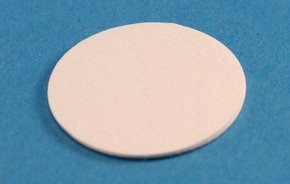
Tell us about your requirement

Price:
Quantity
Select Unit
- 50
- 100
- 200
- 250
- 500
- 1000+
Additional detail
Mobile number
Email

More Products in Laboratory Filtration Products Category
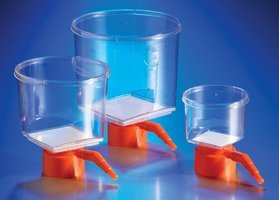
Bottle-Top Vacuum Filters
Price 1000 INR / Piece
Minimum Order Quantity : 1 Ton
Color : White and Orange
Material : Sterile plastic body with membrane filter
Product Type : Vacuum Filters
Weight : 1.5 Kilograms (kg)
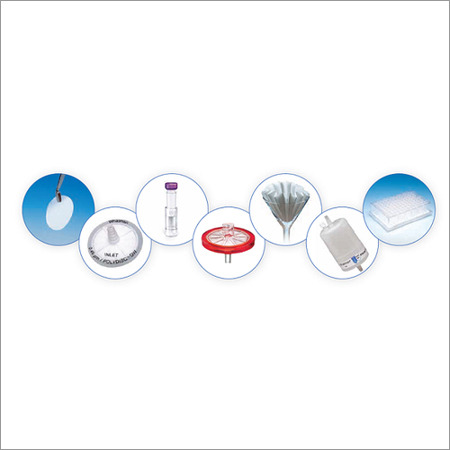
Laboratory Filters
Price 1000 INR / Piece
Minimum Order Quantity : 1 Ton
Color : White and Sky Blue
Material : Paper
Product Type : Laboratory Filters
Weight : 1.5 Kilograms (kg)
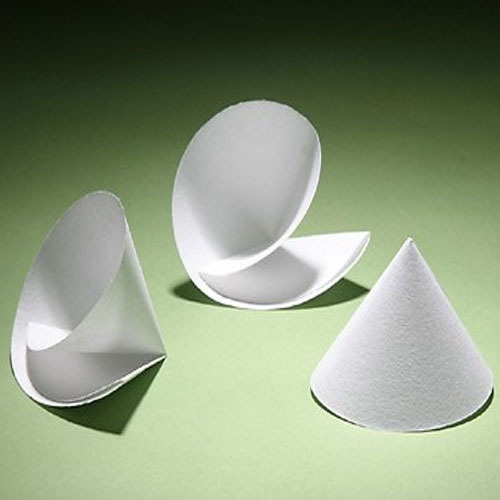
Filter Papers
Price 1000 INR / Piece
Minimum Order Quantity : 1 Ton
Color : White
Material : Paper
Product Type : Filter Papers
Weight : 1.5 Kilograms (kg)
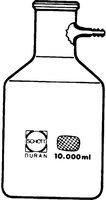
Filtering Bottle Flask
Price 1000 INR / Piece
Minimum Order Quantity : 1 Ton
Color : White
Material : Borosilicate Glass
Product Type : Bottle Flask
Weight : 1.5 Kilograms (kg)

Contact Details

- 104 / 14 B, Muljinagar society, Nizampura, Vadodara - 390002, Gujarat, India
- Phone :07971670415

- Mr Mr Chintak (Partner)
- Mobile :07971670415
- Send Inquiry
 Send Inquiry

 Send Inquiry
 Send SMS
CHINTAN ENTERPRISE
All Rights Reserved.(Terms of Use)
Developed and Managed by Infocom Network Private Limited.
Developed and Managed by Infocom Network Private Limited.
