Trusted company that deals in Quality-made products


 Send Inquiry
Potassium Carbonate
Price 120 INR/ Kilograms
MOQ : 1000 Kilograms
Potassium Carbonate Specification
- Refractive Index
- n20/D 1.427
- EC Number
- 209-529-3
- Odor
- Odorless
- Hazard Statement
- Irritant to eyes and skin
- Molar Mass
- 138.205 gmol1
- HS Code
- 28364000
- Solubility
- Soluble in Water
- Minimum Order Quantity
- As Per Customer Requirement
Potassium Carbonate Trade Information
- Minimum Order Quantity
- 1000 Kilograms
- Payment Terms
- Cash in Advance (CID), Cash Advance (CA)
- Supply Ability
- 25 Kilograms Per Day
- Delivery Time
- 1 Week
- Sample Available
- No
- Sample Policy
- Contact us for information regarding our sample policy
- Packaging Details
- 50 kg Hdpe BAG
- Main Domestic Market
- Gujarat, All India
- Certifications
- COA
About Potassium Carbonate
To meet diverse requirements of our prestigious clients, we are engaged in providing an excellent quality Potassium Carbonate which is widely used in fertilizer, glass, paper, ceramic industries or in welding fluxes. Apart from this, our offered chemicals are available in different packaging options, as per precise needs of our clients and at highly competitive prices. In order to ensure quality, our offered Potassium Carbonate is highly appreciated for their quality like less toxic, soluble in water and accurate composition.
Versatility in Industry
Potassium Carbonate is a valuable component across multiple industries. It is extensively used as a food additive, fertilizer, detergent ingredient, and in laboratories as a reagent. Its versatility extends to glass manufacturing and potash soap production, demonstrating consistent performance in chemical synthesis processes.
Safe Storage and Longevity
Store Potassium Carbonate in tightly closed containers within cool, dry, and well-ventilated spaces to ensure product stability over its 24-month shelf life. Its solid, non-volatile form and reliable packaging-HDPE or paper bags with inner liners-help maintain purity and prevent environmental contact.
High Purity and Reliability
Supplied with a minimum purity of 99%, Potassium Carbonate meets the stringent demands of industrial and laboratory applications. Its stable molecular properties, clear physical state, and solubility make it a consistent choice for manufacturers, traders, suppliers, and exporters in India.
FAQ's of Potassium Carbonate:
Q: How should Potassium Carbonate be stored to preserve its quality?
A: Potassium Carbonate should be stored tightly closed in a cool, dry, well-ventilated area. Proper storage in HDPE or lined paper bags helps prevent moisture absorption and maintains product purity over its 24-month shelf life.Q: What are the main industrial uses of Potassium Carbonate?
A: This compound serves various roles, such as in fertilizer formulation, potash soap production, laboratory reagents, detergents, glass manufacturing, and as a food additive. Its solubility and alkalinity make it valuable for chemical synthesis and processing.Q: When does Potassium Carbonate decompose, and what is its melting point?
A: Potassium Carbonate melts at 891C. Upon reaching its boiling point, it decomposes rather than vaporizing, which is typical for many carbonate compounds.Q: Where is Potassium Carbonate commonly applied in food and textile industries?
A: In the food industry, it acts as a food additive or pH regulator. In textiles, it serves as a scouring agent or textile processing aid due to its alkaline nature and solubility.Q: What precautions should be taken during the handling process of Potassium Carbonate?
A: Since it is an irritant to eyes and skin, it is essential to wear protective gear such as gloves and safety goggles. Ensure good ventilation and avoid direct contact during use and handling.Q: How does Potassium Carbonate benefit glass manufacturing and chemical synthesis?
A: It functions as a flux in glassmaking, reducing melting temperatures and improving product clarity. In chemical synthesis, it acts as a base or buffering agent, supporting a wide range of reactions due to its high purity and predictable reactivity.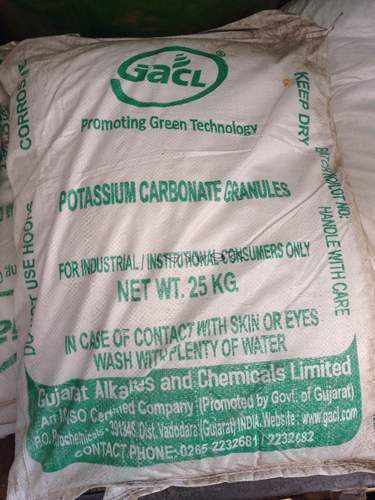
Tell us about your requirement

Price:
Quantity
Select Unit
- 50
- 100
- 200
- 250
- 500
- 1000+
Additional detail
Mobile number
Email

More Products in Bulk Chemical GACL Category
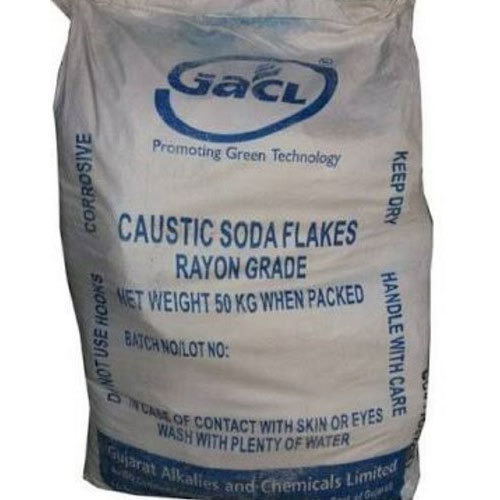
Caustic Soda Flakes
Price 44.0 INR / Kilograms
Minimum Order Quantity : 1000 Kilograms
Storage Instructions : keep them in a cool, dry, and wellventilated area away from heat sources, moisture, acids, and other reactive materials
Size : 0.81.2 mm
Appearance : Crystalline
Purity(%) : 98%
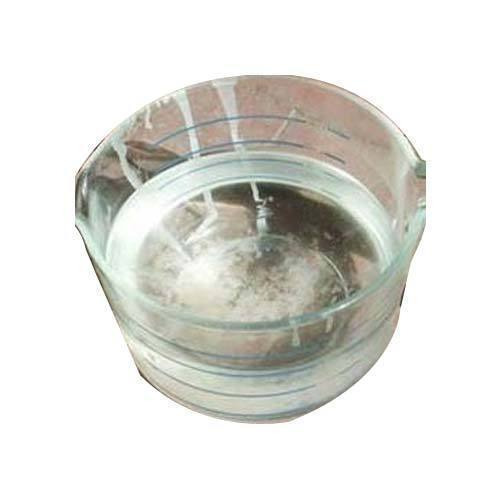
Caustic Soda Lye
Price 35.00 INR / Liter
Minimum Order Quantity : 1000 Liters
Storage Instructions : Cool & Dry Place
Size : Standard
Appearance : Colourless Liquid
Purity(%) : 99%

Contact Details

- 104 / 14 B, Muljinagar society, Nizampura,Vadodara - 390002, Gujarat, India
- Phone :07971670415

- Mr Mr Chintak (Partner)
- Mobile :07971670415
- Send Inquiry
 Send Inquiry

 Send Inquiry
 Send SMS
 Call Me Free
CHINTAN ENTERPRISE
All Rights Reserved.(Terms of Use)
Developed and Managed by Infocom Network Private Limited.
Developed and Managed by Infocom Network Private Limited.
