Trusted company that deals in Quality-made products


 Send Inquiry
Petri Dishes
Price 105 INR/ Piece
MOQ : as per requirement , , Piece
Petri Dishes Specification
- Use
- Laboratory culture of microorganisms such as bacteria and fungi.
- Size
- Standard sizes include 90mm and 100mm diameter.
- Feature
- Transparent, autoclavable, smooth surface, sterile, reusable.
- Advantage
- Provides optimal visibility, easy handling, supports even distribution of medium.
- Shape
- Round with flat base and loose-fitting lid.
- Application
- Microbial growth, cell culturing, laboratory testing.
- Surface Quality
- Scratch-resistant, optically clear for accurate observation of cultures.
- Lid Type
- Vented or non-vented lid versions available for different culture requirements.
- Sterility
- Available as pre-sterilized or non-sterilized options.
- Material
- Made from high-quality borosilicate or clear polystyrene plastic.
- Color
- Clear / Transparent.
- Temperature Resistance
- Can withstand temperatures up to 120C for autoclaving.
Petri Dishes Trade Information
- Supply Ability
- 1000 Pieces Per Week
- Delivery Time
- 1 Week
About Petri Dishes
The range includes :- Dishes, Crystallizing, Made from Heat Resistant, Low Expansion Borosilicate Glass, Riviera.
- Dishes, Crystallizing, With Spout, Duran
- Dishes, Evaporating, Made from Heat Resistant, Low Expansion Borosilicate Glass, Riviera.
- Dishes, Evaporating, with Spout, Duran.
- Dishes, Petri, Made from Heat Resistant, Low Expansion Borosilicate Glass, Riviera.
- Dishes, Petri, Unlimited Autoclavable, Bottom Dish and Lid Inside and Outside absolutely Flat, Free of Bubbles and other Imperfections, Steriplan.
Dishes, Petri, DUROPLAN - made by using special manufacturing process. Superior to other types because they allow even distribution of culture media and have a distortion free transparency. Also, Autoclavable unlimited times.
Superior Material and Design
Crafted from top-grade borosilicate or polystyrene plastic, these Petri dishes ensure resistance to scratches and high temperatures while maintaining exceptional clarity. The round shape with a flat base and loose-fitting lid supports smooth media distribution and reliable microorganism culturing.
Versatile Sterility and Lid Options
Choose between pre-sterilized or non-sterilized Petri dishes, according to your specific requirements. Available with vented or non-vented lid versions, these dishes accommodate different culturing environments, enhancing flexibility in laboratory research and diagnostics.
Applications in Scientific Research
These clear, autoclavable Petri dishes provide the ideal surface and visibility for microbial growth, cell culturing, and various laboratory testing protocols. Their durability and optical quality make them a staple in laboratories in India and worldwide, supporting research, analysis, and education.
FAQs of Petri Dishes:
Q: How are these Petri dishes used in laboratory settings?
A: These Petri dishes are primarily used for culturing microorganisms such as bacteria and fungi. Their smooth, scratch-resistant surface provides a suitable environment for even medium distribution, ensuring accurate and consistent microbial growth during laboratory tests.Q: What is the benefit of choosing borosilicate or polystyrene Petri dishes?
A: Borosilicate and polystyrene materials offer excellent durability, high clarity for precise observation, and resistance to scratches. Borosilicate is also well-suited for autoclaving up to 120C, allowing for repeated sterilization and reuse in research applications.Q: When should I use a vented versus a non-vented lid?
A: Vented lids are recommended when gas exchange is necessary, such as for aerobic cultures, while non-vented lids are ideal for reducing contamination risks and maintaining a closed environment appropriate for anaerobic experiments.Q: Where are these Petri dishes commonly utilized?
A: These Petri dishes are widely used across laboratories in research institutions, educational settings, hospitals, and industrial applications throughout India and the global scientific community for microbial and cell culture studies.Q: What options are available regarding sterility and size?
A: Petri dishes are available in both pre-sterilized and non-sterilized forms, catering to immediate use or custom sterilization processes. Standard diameters of 90mm and 100mm ensure compatibility with most laboratory procedures and incubators.Q: How does the clear, transparent design benefit laboratory work?
A: The optically clear and transparent material of these dishes allows for unobstructed visibility, facilitating precise monitoring, documentation, and assessment of colony growth throughout experiments without disturbing cultures.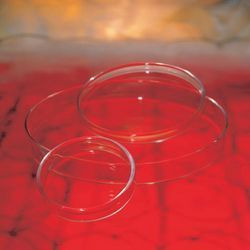
Tell us about your requirement

Price:
Quantity
Select Unit
- 50
- 100
- 200
- 250
- 500
- 1000+
Additional detail
Mobile number
Email

More Products in Laboratory Plasticwares Category
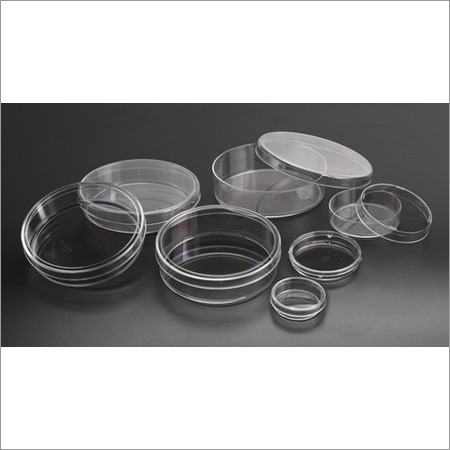
Petri Dish
Price 4 INR / Piece
Minimum Order Quantity : as per requirement , , Piece
Use : Laboratory applications such as microbial culture growth, cell culture, and testing.
Advantage : Reusable, chemically resistant, autoclavable, and provides clear visibility for observation and examination.
Size : 90 mm diameter x 15 mm height (Standard size); available in other sizes as required.
Feature : Transparent, flat surface, with a loosefitting lid to allow air exchange.

Contact Details

- 104 / 14 B, Muljinagar society, Nizampura, Vadodara - 390002, Gujarat, India
- Phone :07971670415

- Mr Chintak (Partner)
- Mobile :07971670415
- Send Inquiry
 Send Inquiry

 Send Inquiry
 Send SMS
 Call Me Free
CHINTAN ENTERPRISE
All Rights Reserved.(Terms of Use)
Developed and Managed by Infocom Network Private Limited.
Developed and Managed by Infocom Network Private Limited.
