Trusted company that deals in Quality-made products


 Send Inquiry
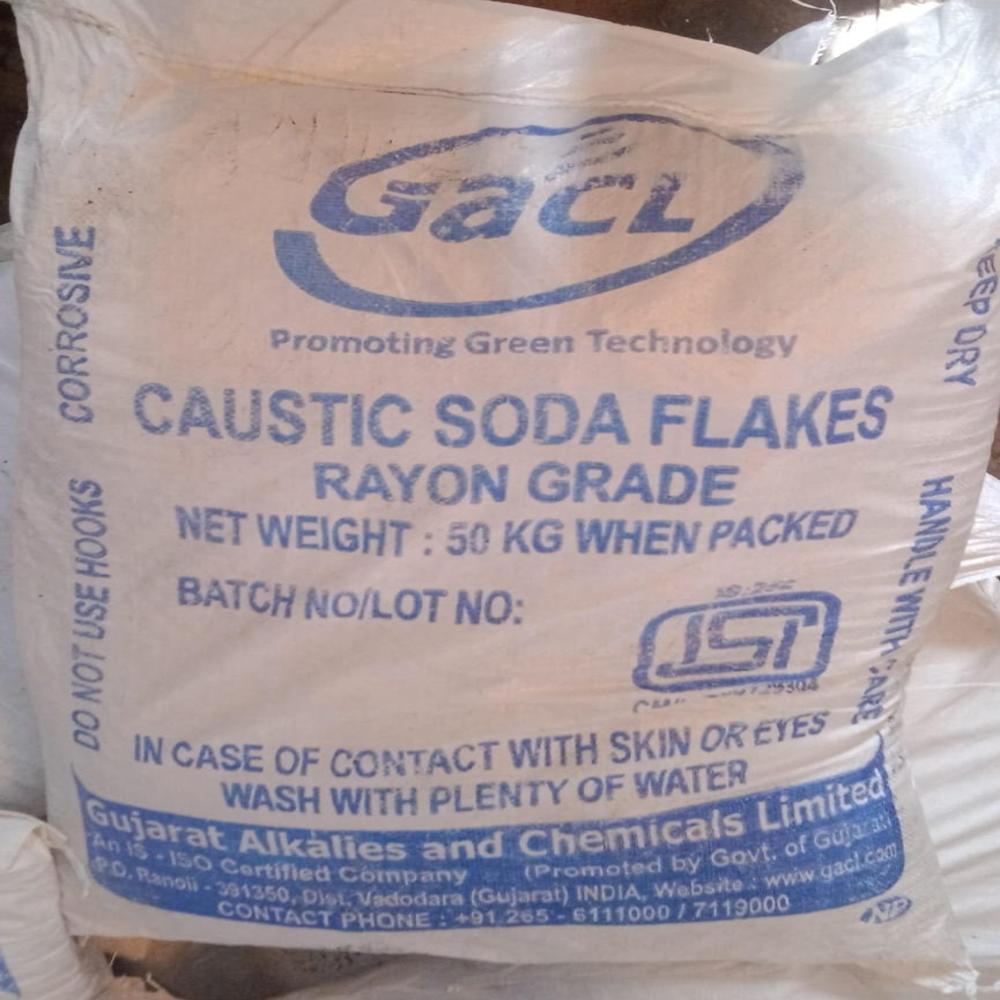
Caustic Soda Flakes
Price 44.50 INR/ Kilograms
MOQ : 1000 Kilograms
Caustic Soda Flakes Specification
- Molecular Weight
- 40.00 g/mol
- Ph Level
- 13-14 (1% solution)
- Purity
- Typically above 99%
- Physical Form
- Flakes
- CAS No
- 1310-73-2
- EINECS No
- 215-185-5
- Solubility
- Highly soluble in water
- Molecular Formula
- NaOH
- Melting Point
- 318C
- Poisonous
- Yes, Corrosive
- Shelf Life
- Stable if kept dry
- Density
- 2.13 Gram per cubic centimeter(g/cm3)
- Properties
- Corrosive, Hygroscopic, High Purity
- Smell
- Odorless
- Usage
- Used as a cleaning agent, chemical reactant, textile processing
- Application
- Chemical processing, Textile (Rayon), Soap and Detergent manufacturing
- Structural Formula
- NaOH
- Taste
- Not applicable (corrosive)
- HS Code
- 2815
- Storage
- Keep dry, handle with care, do not use hooks
- Grade
- Rayon Grade
- Ingredients
- Sodium Hydroxide
- Shape
- Flake
- Product Type
- Caustic Soda
- Appearance
- White Flakes
- Safety Instructions
- In case of contact with skin or eyes wash with plenty of water
- Location
- P.O. Dahej, Dist. Bharuch, Gujarat, India
- Packing Weight
- 50 kg when packed
- IS Standard
- IS:252
- Batch No
- Mentioned on packaging
- Handling Instructions
- Corrosive, Keep dry, Handle with care, Do not use hooks
About Caustic Soda Flakes
GACL (Gujarat Alkalies and Chemicals Limited) manufactures high-purity Caustic Soda Flakes (Sodium Hydroxide, NaOH) with a minimum purity of 99.5% on a dry basis.
Product Overview & Specifications
- Chemical Name: Sodium Hydroxide (NaOH)
- Purity: 99.50% min (Dry basis)
- Manufacturing Technology: Produced using advanced UHDE Membrane Cell Technology.
- Appearance: Free-flowing, white deliquescent (moisture-absorbing) pieces.
Key Applications
According to GACL Product Documentation, these flakes are widely used in heavy and fine industries requiring strong alkalinity:
- Soap & Detergent: Saponification and formulation cleaning agents
- Textiles: Mercerization and cotton processing.
- Pulp & Paper: Delignification and paper bleaching processes.
- Chemicals & Pharmaceuticals: Intermediate synthesis, dyes, and pH neutralization.
- Petroleum & Aluminum: Alumina refining and petroleum product purification.
Versatile Industrial Applications
Caustic Soda Flakes are indispensable in numerous industries, including textiles (especially rayon), chemical processing, and soap and detergent manufacturing. Their high purity ensures optimal reactivity and performance in various cleaning, manufacturing, and processing tasks, while their stable flake form provides ease of storage and transportation.
Stringent Quality and Safety Standards
This product adheres to IS:252 specifications, offering reliability and quality assurance for industrial users. Each batch is clearly marked on the packaging for traceability. Safety is prioritized through strict labeling, as the flakes are corrosive and must be kept dry and handled without hooks to prevent accidents and product degradation.
FAQ's of Caustic Soda Flakes:
Q: How should Caustic Soda Flakes be safely handled and stored?
A: Caustic Soda Flakes must be kept dry and handled with care, as they are highly corrosive. Use suitable protective equipment, avoid contact with skin or eyes, and never use hooks for lifting bags. Store in a cool, dry area, securely closed, to maintain product stability and prevent moisture absorption.Q: What is the primary usage of these Caustic Soda Flakes?
A: These high-purity flakes are predominantly used in the textile industry (particularly rayon production), chemical processing, cleaning, and in the manufacture of soaps and detergents due to their strong alkaline properties and excellent solubility in water.Q: When is it necessary to take special precautions while using this chemical?
A: Special precautions are required at all times during handling, as Caustic Soda Flakes are both corrosive and poisonous. Immediate washing with plenty of water is recommended if contact with skin or eyes occurs. Always handle with care to prevent accidental exposure.Q: Where are these Caustic Soda Flakes manufactured and supplied from?
A: These flakes are produced and distributed from Dahej, District Bharuch, Gujarat, India, ensuring quality control and timely supply to industrial users.Q: What benefits does the high purity of Caustic Soda Flakes offer?
A: The 99.50% minimum purity ensures maximum effectiveness as a chemical reagent, providing consistent results and efficiency in industrial processes such as chemical reactions, textile processing, and cleaning applications.Q: How is the batch number information useful?
A: The batch number is clearly mentioned on the packaging to aid in product traceability, quality assurance, and for referencing during audits or in case of any quality-related inquiries.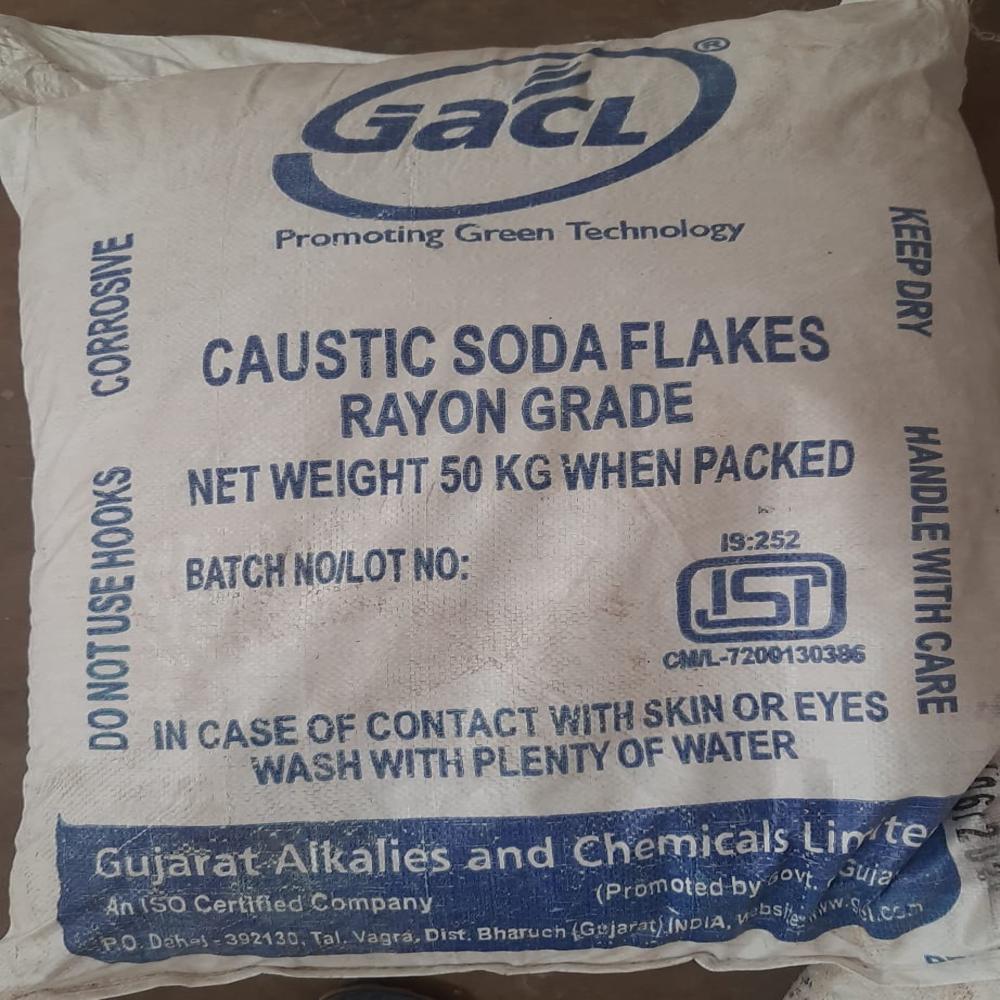
Tell us about your requirement

Price:
Quantity
Select Unit
- 50
- 100
- 200
- 250
- 500
- 1000+
Additional detail
Mobile number
Email

More Products in Bulk Chemical GACL Category
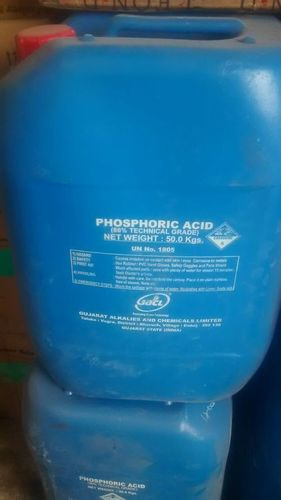
Phosphoric Acid Food Grade
Price 148.00 INR / Liter
Minimum Order Quantity : 1000 Liters
Appearance : Crystalline
Purity(%) : 86%
Type : Industrial Lab Chemicals
Grade : TECHNICAL
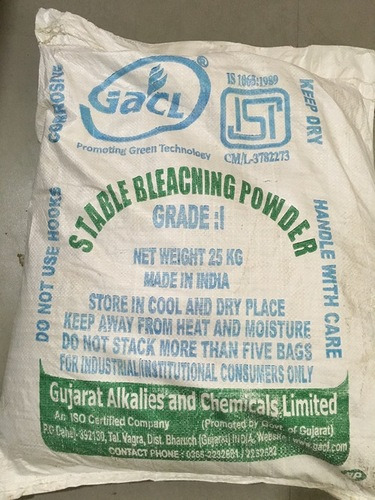
Stable Bleaching Powder
Price 18 INR / Kilograms
Minimum Order Quantity : 1000 Kilograms
Appearance : White Gray Powder
Purity(%) : 985
Type : Industrial Lab Chemicals
Grade : Food
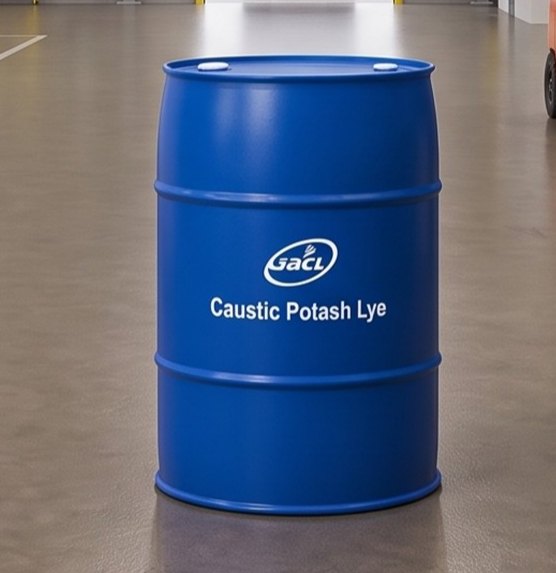
Caustic Potash Lye GACL
Price 120 INR / Kilograms
Minimum Order Quantity : 1000 Kilograms
Appearance : Crystal White
Purity(%) : 98%
Type : Industrial Lab Chemicals
Grade : Food
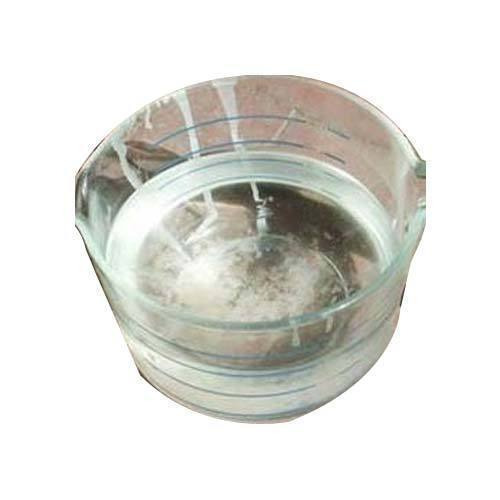
Caustic Soda Lye
Price 35.00 INR / Liter
Minimum Order Quantity : 1000 Liters
Appearance : Colourless Liquid
Purity(%) : 99%
Type : Industrial Lab Chemicals

Contact Details

- 104 / 14 B, Muljinagar society, Nizampura,Vadodara - 390002, Gujarat, India
- Phone :07971670415

- Mr Mr Chintak (Partner)
- Mobile :07971670415
- Send Inquiry
 Send Inquiry


 Send Inquiry
 Send SMS
 Call Me Free

CHINTAN ENTERPRISE
All Rights Reserved.(Terms of Use)
Developed and Managed by Infocom Network Private Limited.
Developed and Managed by Infocom Network Private Limited.
