Trusted company that deals in Quality-made products


 Send Inquiry
Dimethyl sulfoxide-d6
Price 305 INR/ Milliliter
MOQ : 1 , , Ton
Dimethyl sulfoxide-d6 Specification
- Molecular Formula
- C2D6OS
- Ph Level
- Neutral
- Melting Point
- 16.5 C
- Shelf Life
- 2 Years
- Packaging Type
- Glass bottle
- Usage
- Solvent for NMR spectroscopy
- Flash Point
- 95 C
- Purity
- 99.9% (D)
- Boiling point
- 189 C
- Density
- 1.19 Gram per cubic centimeter(g/cm3)
- Physical State
- Liquid
- Size
- Custom as per requirement
- CAS No
- 2206-27-1
- Storage Instructions
- Store in a cool, dry place, tightly closed
- Molecular Weight
- 84.19 g/mol
- Grade
- Anhydrous
- Type
- Industrial Lab Chemicals
- Application
- NMR Spectroscopy, Research and Laboratory use
- Appearance
- Colorless
- Purity(%)
- 98%
- UN Number
- UN1162
- Deuterium Enrichment
- >99.8 atom% D
- Water Content
- <0.01%
- Lead Content
- <0.0003%
- Stability
- Stable under recommended storage conditions
- Solubility
- Miscible with water
- Heavy Metals
- <0.0005%
- Synonyms
- DMSO-d6, Deuterated DMSO, Dimethylsulfoxide-d6
- Isotopic Purity
- >99.8 atom% D
- Refractive Index
- 1.479 - 1.482 at 20C
Dimethyl sulfoxide-d6 Trade Information
- Minimum Order Quantity
- 1 , , Ton
- Payment Terms
- Cash in Advance (CID), Cash Advance (CA)
- Supply Ability
- 1 , , Ton Per Week
- Delivery Time
- 1 Week
- Main Domestic Market
- All India
About Dimethyl sulfoxide-d6
NMR Solvents
Packaging
1, 5 g in ampule
100.25, 100.5, 100.75, 101 mL in ampule
25 g in glass bottle
Application
Dimethyl sulfoxide-d6 has been used as solvent for the dissolution of glucan during its proton, 13C (Carbon-13) and 2D NMR (Two-Dimensional Nuclear Magnetic Resonance) spectral studies.Dimethyl sulfoxide-d6 may be used as a solvent to study the nuclear magnetic resonance spectra(NMR) of the corresponding 1,3- benzoxazines and 1,3-benzoxazinones, which tend to possess antimicrobial activity.
General description
Dimethyl sulfoxide-d6 (DMSO-d6) is a deuterated solvent. It is 100% isotopically enriched NMR (Nuclear Magnetic Resonance) solvent. It is widely employed in high resolution NMR studies due to its high chemical and isotopic purity. On photoirradiation in the range of 193 and 222nm, it undergoes decomposition to afford CD3 radicals. Quantum yields of CD3 have been evaluated by infrared diode laser absorption spectroscopy. 100% DMSO-d6 has been used as solvent in the long-range COSY (Correlation Spectroscopy) experiment.
| vapor pressure | 0.42 mmHg ( 20 C) |
| InChI Key | IAZDPXIOMUYVGZ-WFGJKAKNSA |
| isotopic purity | 99.96 atom % D |
| assay | 99% (CP) |
| autoignition temp. | 573 F |
| expl. lim. | 42 % |
| refractive index | n |
Ultra-High Isotopic Purity for Precise Analysis
With deuterium enrichment exceeding 99.8 atom% D, DMSO-d6 provides unmatched isotopic purity, ensuring interference-free backgrounds in proton NMR spectroscopy. This quality is vital for researchers who require accurate and reproducible spectral data from their samples.
Reliable Stability and Storage Guidelines
DMSO-d6 is stable when stored properly in a tightly sealed glass bottle, kept in a cool, dry location. Its anhydrous grade and low water content preserve its integrity, giving it a shelf life of up to 2 years and making it a dependable choice for repeated laboratory use.
Versatile Applications in Research
This compound is primarily used as a solvent in NMR spectroscopy due to its transparency and non-reactive properties. Its high chemical and isotopic purity also make it suitable for various analytical and research purposes, supporting advancements in chemical and pharmaceutical studies.
FAQ's of Dimethyl sulfoxide-d6:
Q: How is Dimethyl sulfoxide-d6 commonly used in laboratories?
A: Dimethyl sulfoxide-d6 is most often used as a deuterated solvent in Nuclear Magnetic Resonance (NMR) spectroscopy. Its high isotopic purity minimizes background interference, allowing researchers to analyze sample spectra with greater accuracy.Q: What precautions should I take when storing DMSO-d6?
A: To maintain its quality, store DMSO-d6 in a cool, dry place using the tightly closed glass bottle it is supplied in. This protects it from moisture and contaminants, ensuring its stability and anhydrous properties for up to 2 years.Q: When is it beneficial to use DMSO-d6 versus other deuterated solvents?
A: DMSO-d6 is ideal when your analysis requires a solvent that is miscible with water, has neutral pH, and possesses high deuterium enrichment. Its broad compatibility with various samples and minimal background in NMR make it a go-to choice for challenging research applications.Q: What level of purity and isotopic enrichment does DMSO-d6 offer?
A: DMSO-d6 delivers outstanding purity, with a chemical purity of 98% and deuterium isotopic purity exceeding 99.8 atom%. The product's water content remains below 0.01%, and it meets strict regulatory limits for lead and heavy metals.Q: Where is Dimethyl sulfoxide-d6 manufactured and distributed?
A: Dimethyl sulfoxide-d6 is manufactured, exported, and distributed by professional industrial lab chemical suppliers and traders based in India. Custom packaging sizes are often available to meet specific research requirements.Q: What benefits does DMSO-d6 provide in NMR spectroscopy?
A: The primary benefit is its minimal proton background, due to high deuterium content. This ensures cleaner, high-resolution spectra, enabling more accurate identification and quantification of sample components.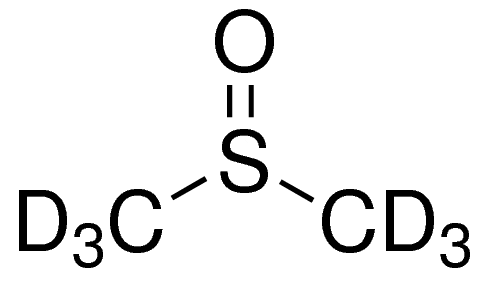
Tell us about your requirement

Price:
Quantity
Select Unit
- 50
- 100
- 200
- 250
- 500
- 1000+
Additional detail
Mobile number
Email

More Products in Certified Reference Standards CRM Category

Methanol - d4
Price 305 INR / Milliliter
Minimum Order Quantity : 1 , , Ton
Purity : 99.8% D (Isotopic)
Storage Instructions : Store tightly closed in a cool, dry, wellventilated place, away from ignition sources.
Usage : Used as a solvent for NMR spectroscopy
Purity(%) : 98%
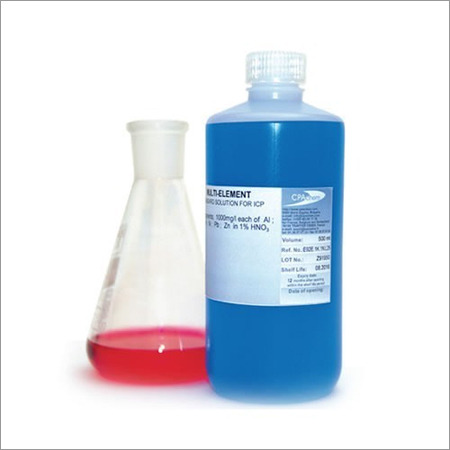
ICP Standard
Price 305 INR / Milliliter
Minimum Order Quantity : 1 Ton
Purity : >99%
Storage Instructions : Store at room temperature, avoid direct sunlight
Usage : Used as calibration standard in ICP and AAS analysis
Purity(%) : 99%
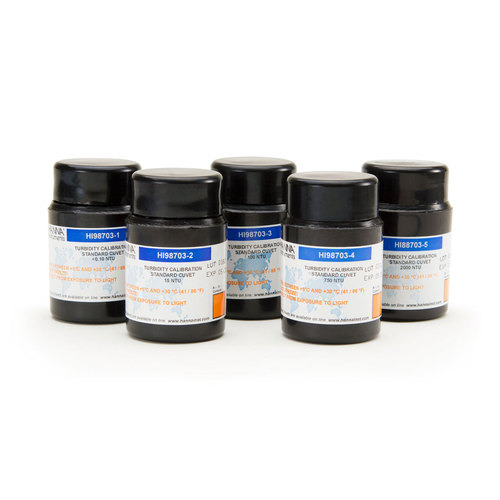
Calibration Set for Turbidity meters
Price 305 INR / Milliliter
Minimum Order Quantity : 1 Ton
Purity : 99.9%
Storage Instructions : Store at room temperature, away from direct sunlight
Usage : Instrument calibration
Purity(%) : 98%

Contact Details

- 104 / 14 B, Muljinagar society, Nizampura, Vadodara - 390002, Gujarat, India
- Phone :07971670415

- Mr Chintak (Partner)
- Mobile :07971670415
- Send Inquiry
 Send Inquiry

 Send Inquiry
 Send SMS
CHINTAN ENTERPRISE
All Rights Reserved.(Terms of Use)
Developed and Managed by Infocom Network Private Limited.
Developed and Managed by Infocom Network Private Limited.
